You turn onto your street after a long day, and your home’s facade welcomes you back. It greets guests before they step inside, withstands changing weather, and sets the tone for the interiors. Thoughtful exterior wall design can make even a simple house feel well considered. You do not need to redesign every wall to make an impact. A few well-planned choices in colour, texture, lighting, and materials can give your home a distinct identity while helping the facade maintain its appeal over time.
Start with the Architecture, Not the Trend
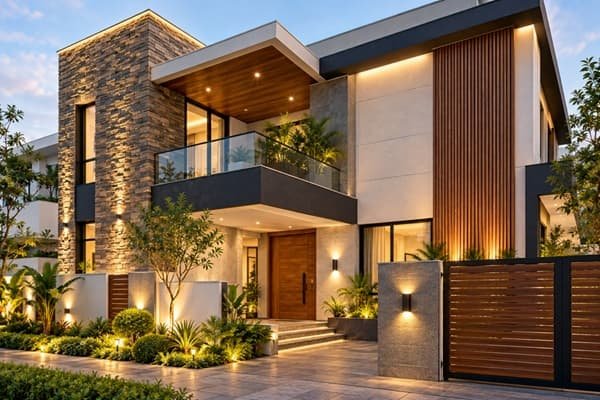
The best facades work with the house, not against it. Before choosing a finish, look closely at these elements:
- Proportions: Broad, uncluttered surfaces suit a contemporary home with clean lines.
- Roofline and windows: Their shapes and rhythm suggest where texture or colour changes should fall.
- Entrance: This is your natural focal point, so plan the design around it.
- Setting: A sun-facing wall can look several shades lighter at noon than at dusk, while a shaded entrance often reads darker than the sample.
Whatever you choose, view samples outdoors, on the actual wall, at different times of day before you decide.
Use Surface Materials to Add Character
A facade doesn’t have to rely on paint alone. A few well-chosen surfaces add depth without making the exterior look busy. A textured feature wall around the entrance creates a focal point, while a quieter finish elsewhere keeps the composition balanced.
Engineered surfaces make this easier, with finishes inspired by natural stone, marble, concrete, and wood. For exterior wall design, look for surfaces rated UV-stable so the colour holds up in strong sun.
Keep the palette to two or three complementary materials, such as a wood-look finish, a neutral wall colour and a restrained dark accent. Repeating one surface at the entrance, boundary wall or outdoor seating area helps tie the whole property together.
Six Exterior Wall Design Ideas to Consider
Treat these ideas as starting points and adapt them to your exterior home design, style and practical needs:
- Create an entrance feature: Frame the main door with a contrasting surface or texture, and keep the surrounding walls simple so the entrance stays the focal point.
- Use neutral shades: Warm white, beige, grey, and earthy tones suit most architectural styles. Test samples in natural light before you commit.
- Add vertical lines: Slender fins, grooves or vertical panels can make a facade look taller. Use them on selected surfaces, not every wall.
- Combine solid and open elements: Screens, jaalis, railings and planting soften large blank walls and create a layered view from the street.
- Choose light for the effect you want: Grazing light from fittings close to the wall, aimed along it, brings out texture. Wall washers set further back give even light that flattens texture and suits smooth walls. Choose outdoor-rated fittings (IP65 or higher on exposed walls) and avoid glare into windows or neighbouring homes.
- Bring in greenery: Climbers, planters and small beds balance hard surfaces. Grow climbers on a trellis set slightly off the wall, since some species trap moisture or root into masonry.
Pick the two or three that suit your home best, and confirm each product’s suitability for exterior use before work starts.
Choose Colours That Work with the Surroundings
Colour shapes how a house reads from the street. Light shades make a compact facade feel more open, while deeper colours emphasise recesses, frames and architectural lines. A simple hierarchy keeps it easy to read:
- Main colour: One shade across most of the facade.
- Supporting shade: A second tone for recesses or secondary volumes.
- Accent: A small dose around selected details.
In hot, sunny climates, colour also affects comfort. Dark walls absorb more of the sun’s heat and can warm the rooms behind them, so keep deep tones to smaller or shaded areas.
Exterior finishes also face dust, rain, pollution and temperature swings. A shade that looks lovely on a sample may need frequent cleaning beside a busy road, so ask about upkeep before you choose.
Balance Appearance with Durability
A facade should still look good long after the first season. Manufacturers like Neotra Advanced Surfaces, for example, offer engineered surfaces that resist fire, scratches, and stains and are unaffected by UV light. Even so, a high-performing surface underperforms on a poorly prepared wall, so check these points before installation:
- Substrate: Is the wall sound, level and ready to take the chosen finish?
- Drainage and waterproofing: How will water be kept out and drained away?
- Fixing method: Large-format panels on upper floors usually need a mechanical or ventilated facade system designed by a professional, not adhesive alone.
- Product suitability: Is the chosen collection and thickness recommended for your wall and building height?
Plan for access and future repairs too. Surfaces that clean with mild soap and water make routine care easier, and keeping product details and installation records simplifies any future work.
Make the Facade Feel Connected to the Home
A strong exterior leads naturally into the interiors. Repeat a facade colour in the entrance, use a related finish on an outdoor counter, or match window frames to an interior accent. Rooms don’t need to look alike; the transitions between them should simply feel intentional.
Consider the facade from inside, too. The view through a window, the daylight it lets in and the link between a living room and its balcony all shape how the home feels day to day.
Plan the Details Before Work Begins
Small details decide whether a facade looks seamless or patched together. Before approving the design, review:
- Full-size samples: View full-size samples on site and in natural daylight before making a final decision.
- Joint layouts: Check where the joints will fall across each wall to ensure a consistent finish.
- Corners and openings: Review how the surfaces will meet doors, windows, corners, and edges.
- Complete costs: Compare the total cost of preparation, installation, accessories, and maintenance, not just material prices.
If you can, visit a finished project using similar surfaces to see how they look in daylight and how the joints are finished.
Conclusion
Good exterior wall design brings together proportion, colour, texture, lighting and performance. Start with your home’s character, keep the palette restrained, and use feature surfaces where they add purpose, not just decoration. Factor in your local weather, sun and maintenance from the start. Made early, these decisions give even a modest update a welcoming, cohesive result.