Fine dining can be expensive, but at the highest level, dinner becomes something far beyond an ordinary restaurant meal. Rare seafood, caviar, truffles, highly trained service teams, private dining rooms and theatrical technology can push the price of a single experience into four figures per person.
The restaurants below are ranked using their highest publicly listed or recently reported tasting-menu and special-course prices available in 2026. Some prices include drinks, tax or service, while others do not, and a few seasonal menus start at a stated minimum and can rise with market prices.
So, let’s check out the Top 10 Most Expensive Restaurants in the World and discover what diners receive when a single meal can cost as much as a luxury holiday.
1. Sublimotion, Ibiza, Spain – €1,760 per Person
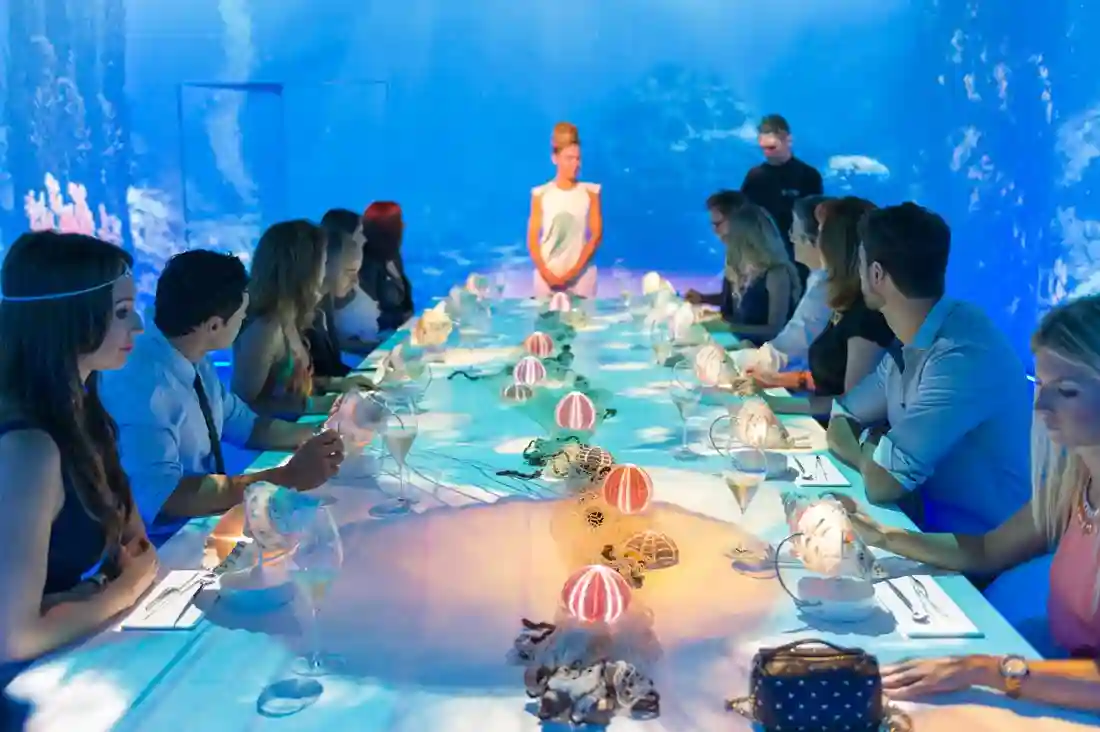
Sublimotion is less a conventional restaurant than a tightly choreographed gastronomic show. Created by chef Paco Roncero, the Ibiza experience combines haute cuisine with projection, lighting, sound, illusion and other technology around a single table.
For the 2026 season, the experience has been reported at €1,760 per person, with taxes included. The meal is designed as a multi-course performance rather than a simple tasting menu, and the restaurant serves only a very small number of guests during each sitting.
Its extreme price comes from the combination of food, premium beverages, technical production and entertainment. Diners are effectively paying for a private-scale theatrical event in which every course is matched with a changing visual and sensory environment.
2. Ginza Kitafuku, Tokyo, Japan – ¥300,000 and Up per Person
Ginza Kitafuku is famous for preparing enormous live crabs directly in front of guests. Its most extravagant offering is the seasonal Echizen Crab “KIWAMI” Course, which starts at ¥300,000 per person.
KIWAMI is an exceptionally rare grade of Echizen crab that must meet strict size and quality standards. The restaurant describes it as the top level of Japanese crab, and the final price can rise depending on availability and market conditions.
The experience is intensely ingredient-driven. Rather than dozens of unrelated luxury products, the meal focuses on one extraordinarily scarce seasonal ingredient and presents it through multiple preparations. At this level, rarity and market supply can matter as much as culinary technique.
3. Ultraviolet by Paul Pairet, Shanghai, China – From RMB 6,800 per Person
Ultraviolet by Paul Pairet turns dinner into a controlled multisensory production. The restaurant has a single table for only ten guests, while each course is accompanied by its own combination of lighting, sound, music, projection, scent and atmosphere.
Its current set-menu price starts from RMB 6,800 per person and includes the restaurant’s “Atmosphere and Drinks.” The experience features around 20 courses and is designed to unfold more like a performance than a normal sequence of plates.
Only a tiny number of diners can attend each evening, which makes the experience inherently exclusive. Much of the cost therefore comes not only from ingredients but also from the elaborate technology, staffing and custom environment created around every course.
4. Masa, New York City, USA – $950 per Person
Masa in New York remains one of the most expensive conventional restaurant reservations in the United States. Its Hinoki Counter Omakase is priced at $950 per person, excluding beverages, tax and optional gratuity.
The restaurant is built around chef Masa Takayama’s interpretation of Japanese omakase. Diners at the counter surrender most of the decision-making to the chef, allowing the meal to move through premium seafood, rice and seasonal ingredients according to what is best that day.
Unlike immersive restaurants that spend heavily on screens or performance, Masa’s luxury is deliberately restrained. The price is driven by ingredient quality, sourcing, craftsmanship, an intimate setting and the prestige attached to one of America’s most famous sushi dining rooms.
5. Restaurant Guy Savoy, Paris, France – €760 per Person
Restaurant Guy Savoy at the Monnaie de Paris offers one of the most expensive published tasting menus in Europe. Its “Colours, Textures & Flavours” menu is priced at €760 per person, excluding drinks.
The menu brings together many of the restaurant’s signature luxury ingredients and techniques, including caviar, lobster, foie gras, red mullet, truffle and elaborate desserts. Guy Savoy’s celebrated artichoke soup with black truffle also appears within the experience.
The high price reflects both the number of courses and the level of ingredients, preparation and service. This is classic French haute cuisine at its most elaborate, served in a formal Paris setting where the meal can extend through a long sequence of savoury courses, cheese and desserts.
6. Alchemist, Copenhagen, Denmark – DKK 5,600 per Person
Alchemist in Copenhagen describes its dinner as a “holistic cuisine” experience rather than simply a tasting menu. The full Alchemist Experience costs DKK 5,600 per person before optional beverage pairings.
Guests move through different physical spaces during a meal lasting roughly four to six hours. The experience can include up to 50 “impressions,” some edible and others theatrical, artistic or conceptual.
The restaurant’s scale explains much of the cost. A huge team is required to create food, visual installations, service and technical effects for a relatively small number of diners. Optional wine pairings can raise the bill dramatically, including an ultra-premium Sommelier Table experience for diners wanting exceptionally rare wines.
7. Kyoto Kitcho Arashiyama, Kyoto, Japan – ¥125,400 and Up per Person
Kyoto Kitcho Arashiyama represents a very different form of luxury from technology-driven restaurants. Its chef’s Omakase Course starts at ¥95,000 before service and tax, or ¥125,400 with service and tax included under the restaurant’s published pricing.
The restaurant notes that the course has no ceiling price because it depends on market ingredients. During seasons associated with matsutake mushrooms, crab and blowfish, prices can rise further.
The experience is rooted in kaiseki, where seasonality, presentation, ceramics, room setting and the progression of dishes are treated as parts of one composition. Diners are paying for highly personalised Japanese hospitality as well as rare ingredients and meticulous preparation.
8. Plénitude, Paris, France – About €495 per Person
Plénitude at Cheval Blanc Paris is the three-Michelin-star restaurant of chef Arnaud Donckele. Its cuisine places unusual emphasis on sauces, broths and aromatic preparations, treating them as central components rather than supporting elements.
Recent 2026 dining reports place the full Symphony menu at about €495 per person before drinks. The restaurant’s official material describes the meal as a sequence built around “preludes,” fish, meats and desserts, with sauces connecting the entire experience.
The price reflects an intimate dining room, extensive kitchen work and an unusually detailed approach to flavour construction. Wine pairings can add hundreds of euros more, making the final bill considerably higher than the menu price alone.
9. Epicure at Le Bristol Paris, France – €490 per Person
Epicure at Le Bristol Paris offers an eight-service tasting menu priced at €490 per person. The menu changes with the season but uses ingredients associated with the highest end of French dining, including caviar, blue lobster, premium fish, carefully sourced meats and elaborate desserts.
The restaurant combines classical French luxury with modern technique. Courses are structured to showcase individual ingredients rather than overwhelming them, and the dining room and hotel service add to the sense of occasion.
A six-service lunch option costs less, but the full evening-style tasting menu places Epicure among the world’s most expensive mainstream fine-dining experiences even before wine is added.
10. Restaurant de l’Hôtel de Ville, Crissier, Switzerland – CHF 410 per Person
Restaurant de l’Hôtel de Ville in Crissier has been one of Switzerland’s great fine-dining institutions for generations. Its 2026 gastronomic menu is priced at CHF 410 per person.
The menu is built around top seasonal produce and can include caviar, langoustines, red mullet, premium lake and sea fish, meat, cheese and intricate desserts. The restaurant also offers special seasonal menus that can cost even more.
Its price reflects the Swiss cost base, three-Michelin-star level cooking, a large service operation and highly refined sourcing. Unlike the theatrical restaurants higher in this ranking, the emphasis here remains firmly on classical gastronomy, precision and the continuity of a famous culinary institution.
What Makes the World’s Most Expensive Restaurants So Costly?
Rare ingredients are only one part of the bill. Premium crab, caviar, truffles, bluefin tuna and carefully sourced meat can be extremely expensive, but the labour behind a long tasting menu is just as important. Dozens of cooks and service professionals may work for hours to serve a relatively small number of guests.
Exclusivity also pushes prices higher. Ultraviolet has only ten seats at one table, while Sublimotion builds an entire technical production around a tiny audience. At restaurants such as Kyoto Kitcho and Masa, scarcity comes instead from intimate seating, specialised craftsmanship and access to exceptional ingredients.
Finally, menu prices do not tell the whole story. Wine pairings, rare bottles, supplements, tax and service can add hundreds or even thousands of dollars to the final bill. That is why the figures above should be read as the starting cost of the restaurant experience rather than the maximum amount a guest could spend.
Final Word
The world’s most expensive restaurants show that extreme dining can take very different forms. Sublimotion and Ultraviolet combine food with technology and performance, while Masa and Ginza Kitafuku place the focus on extraordinary ingredients and specialised Japanese technique. Parisian institutions such as Guy Savoy, Plénitude and Epicure represent another tradition built around elaborate haute cuisine and meticulous service.
At these restaurants, diners are not paying only for what is on the plate. They are paying for scarcity, craftsmanship, time, atmosphere and access to experiences that can be served to only a handful of people each night.