India’s rivers have shaped its geography, agriculture, cities and civilisation for thousands of years. From the snow-fed waterways of the Himalayas to the great peninsular rivers of central and southern India, these river systems support hundreds of millions of people and some of the country’s most productive agricultural regions.
River length can sometimes vary slightly between official publications because of differences in the point chosen as the source, river branches and measurement methods. For transboundary rivers such as the Indus and Brahmaputra, this ranking considers their course associated with India rather than ranking them by their entire international length.
The Ganga remains India’s longest major river, while the Godavari is the longest river flowing entirely within the country. Let’s check out the top 10 list of the longest rivers in India.
1. Ganga River – 2,525 km
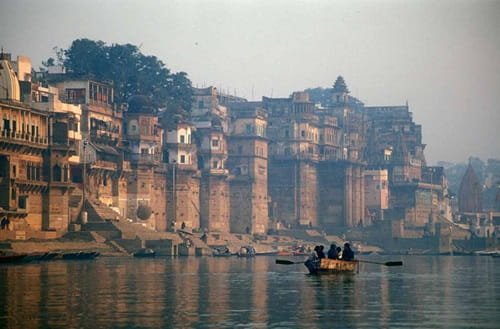
The Ganga, or Ganges, is the longest major river in India, with a length of approximately 2,525 kilometres.
Its journey begins in Uttarakhand, where the Bhagirathi originates from the Gangotri Glacier region. At Devprayag, the Bhagirathi meets the Alaknanda, and from this confluence the river is officially known as the Ganga.
The river then travels through Uttarakhand, Uttar Pradesh, Bihar, Jharkhand and West Bengal before reaching its vast delta system and the Bay of Bengal. Major cities along or close to its course include Haridwar, Kanpur, Prayagraj, Varanasi, Patna and Kolkata.
Important tributaries include the Yamuna, Ghaghara, Gandak, Kosi and Son. Beyond its enormous economic importance, the Ganga has exceptional religious and cultural significance and is officially recognised as India’s National River.
2. Godavari River – 1,465 km
The Godavari River is approximately 1,465 kilometres long, making it the second-longest river in India and the longest river whose entire course lies within the country.
It originates near Trimbakeshwar in Maharashtra’s Nashik district, in the Western Ghats, before flowing generally eastwards across peninsular India.
The Godavari basin extends across Maharashtra, Telangana, Andhra Pradesh, Chhattisgarh, Odisha and parts of other states. The river eventually forms a large delta before entering the Bay of Bengal.
Major tributaries include the Pranhita, Indravati, Manjira, Sabari and Purna. Because of the size of its basin and its importance to agriculture, the Godavari is often called the Dakshin Ganga, or Ganga of the South.
3. Krishna River – 1,400 km
The Krishna River flows for approximately 1,400 kilometres from the Western Ghats to the Bay of Bengal.
It rises near Mahabaleshwar in Maharashtra at an elevation of more than 1,300 metres and flows eastward through Maharashtra, Karnataka, Telangana and Andhra Pradesh.
The Krishna supports one of the largest agricultural regions in southern India. Numerous dams and irrigation projects have been constructed along the river and its tributaries to provide water for farming, cities and hydroelectric generation.
Important tributaries include the Bhima, Tungabhadra, Ghataprabha, Malaprabha, Musi and Munneru. After travelling across the Deccan Plateau, the Krishna forms a delta before reaching the Bay of Bengal in Andhra Pradesh.
4. Yamuna River – 1,376 km
The Yamuna River is approximately 1,376 kilometres long and is the most important right-bank tributary of the Ganga.
It originates from the Yamunotri Glacier region in Uttarakhand, high in the Himalayas. From there it flows through or along Uttarakhand, Himachal Pradesh, Haryana, Delhi and Uttar Pradesh.
Delhi, Mathura and Agra are among the major urban centres associated with the Yamuna. The river finally meets the Ganga at Prayagraj, at the famous Triveni Sangam.
Its principal tributaries include the Chambal, Sindh, Betwa and Ken. Although the Yamuna is technically a tributary rather than an independent river system reaching the sea, its remarkable length places it among India’s longest rivers.
5. Narmada River – 1,312 km
The Narmada is one of India’s great west-flowing rivers, travelling approximately 1,312 kilometres before reaching the Arabian Sea.
It originates at Amarkantak in Madhya Pradesh and flows westwards through a long valley between the Vindhya and Satpura ranges.
Most major peninsular rivers flow towards the Bay of Bengal, making the Narmada’s westward course particularly distinctive. It passes primarily through Madhya Pradesh before entering Gujarat and finally flowing into the Gulf of Khambhat.
Major projects on the river include the Sardar Sarovar Dam and Indira Sagar Dam. The Narmada is also considered sacred, and the traditional Narmada Parikrama pilgrimage follows an extensive route along its banks.
6. Indus River – Around 1,114 km Associated with India
The Indus is one of the great river systems of Asia and the river from which India ultimately derives its name.
The entire Indus stretches for thousands of kilometres across Tibet, the Indian region and Pakistan. Official Indian basin records commonly place the river’s course associated with India at around 1,114 kilometres, although published measurements of the precise Indian stretch can vary depending on the geographical definition used.
The river originates near the Tibetan Plateau close to the Mount Kailash region and enters Ladakh, where it flows through a dramatic high-altitude landscape. The Zanskar, Shyok and other Himalayan rivers join the Indus during its wider journey.
After leaving the Indian region, the river becomes the central waterway of Pakistan and finally empties into the Arabian Sea. Its basin supported the ancient Indus Valley Civilisation, one of the world’s earliest urban civilisations.
7. Brahmaputra River – Around 998 km in India
The Brahmaputra is one of Asia’s largest rivers by water discharge and flows for roughly 1,000 kilometres through India, depending on the exact course measurement used.
The river originates in Tibet, where it is generally known as the Yarlung Tsangpo. It enters India through Arunachal Pradesh, where sections are known as the Siang or Dihang.
After receiving rivers such as the Dibang and Lohit, it becomes the Brahmaputra and flows through the broad Assam Valley. Its Indian course is approximately 278 kilometres in Arunachal Pradesh and about 720 kilometres through Assam.
The Brahmaputra eventually enters Bangladesh, where it joins the Ganga-Meghna river system before reaching the Bay of Bengal. Its huge flow, seasonal floods, fertile floodplains and braided channels make it one of India’s most powerful and geographically important rivers.
8. Mahanadi River – 851 km
The Mahanadi River has a total length of approximately 851 kilometres.
It originates near Nagri in Chhattisgarh, at an elevation of around 442 metres, before flowing eastwards through Chhattisgarh and Odisha.
Approximately 357 kilometres of the river lie in Chhattisgarh, while the remaining course passes through Odisha before the Mahanadi forms an extensive delta and enters the Bay of Bengal.
Important tributaries include the Seonath, Hasdeo, Mand, Ib, Ong and Tel. The famous Hirakud Dam, built across the Mahanadi near Sambalpur, is one of India’s largest multipurpose river projects and plays an important role in irrigation, flood control and electricity generation.
9. Kaveri River – 800 km
The Kaveri, also written as Cauvery, flows for approximately 800 kilometres across southern India.
It begins at Talakaveri in Karnataka’s Kodagu district, in the Brahmagiri hills of the Western Ghats, before flowing mainly through Karnataka and Tamil Nadu.
Several important tributaries join the Kaveri, including the Hemavati, Kabini, Shimsha, Bhavani and Amaravati. Major dams such as Krishna Raja Sagara and Mettur have made the river critically important for irrigation and water supply.
After crossing the plains of Tamil Nadu, the Kaveri develops an extensive and agriculturally productive delta before emptying into the Bay of Bengal. The river has major religious importance and is often called the Ganga of the South.
10. Tapi River – 724 km
The Tapi, or Tapti, completes the top ten with a length of approximately 724 kilometres.
Like the Narmada, the Tapi is unusual because it flows westwards towards the Arabian Sea. It rises near Multai in Madhya Pradesh’s Betul district, at an elevation of about 752 metres.
The river travels through Madhya Pradesh, Maharashtra and Gujarat. A large portion of its basin lies in Maharashtra before the Tapi reaches Gujarat and passes near Surat.
Major tributaries include the Purna, Girna, Panjhra, Vaghur and Aner. Important projects such as the Ukai Dam help provide irrigation, electricity and water management within the basin.
The Tapi finally enters the Gulf of Khambhat, completing one of the major west-flowing river journeys of peninsular India.
What Makes India’s Longest Rivers So Important?
India’s great rivers are valuable for far more than their length.
Agriculture: River water supports irrigation across some of India’s most productive farming regions.
Drinking water: Hundreds of towns and major cities depend directly or indirectly on river systems for water supply.
Hydroelectric power: Dams constructed across major rivers generate electricity and help regulate water availability.
Fertile plains and deltas: Rivers deposit nutrient-rich sediment that has supported farming and human settlements for thousands of years.
Culture and religion: Rivers such as the Ganga, Yamuna, Narmada, Godavari and Kaveri hold deep religious significance.
Biodiversity: River systems support wetlands, forests, fish, freshwater dolphins and numerous other species.
Economic development: Navigation, fisheries, tourism, agriculture and industries all benefit from dependable river systems.
Final Word
India’s longest rivers form the backbone of the country’s natural and human geography. The Ganga leads the ranking at approximately 2,525 km, followed by the Godavari and Krishna.
From the Himalayan Ganga and Brahmaputra to the peninsular Godavari, Narmada and Kaveri, these rivers continue to support agriculture, cities, ecosystems and cultures across enormous parts of India.