India’s major dams are among the country’s most important engineering structures. They store water for irrigation and cities, generate hydroelectric power, control floods and support agriculture across vast regions. Some rise hundreds of metres above their foundations, while others create reservoirs stretching across hundreds of square kilometres.
Because the word ‘biggest’ can mean height, length, reservoir area or storage capacity, this ranking uses one clear measure: maximum structural height above the lowest or deepest foundation. Only completed and operational dams are included, while other size records are mentioned naturally within the entries.
So, let’s check out the Top 10 Biggest Dams in India and see where they are located, which rivers they cross and what makes each of these enormous structures important.
1. Tehri Dam, Uttarakhand – 260.5 Metres
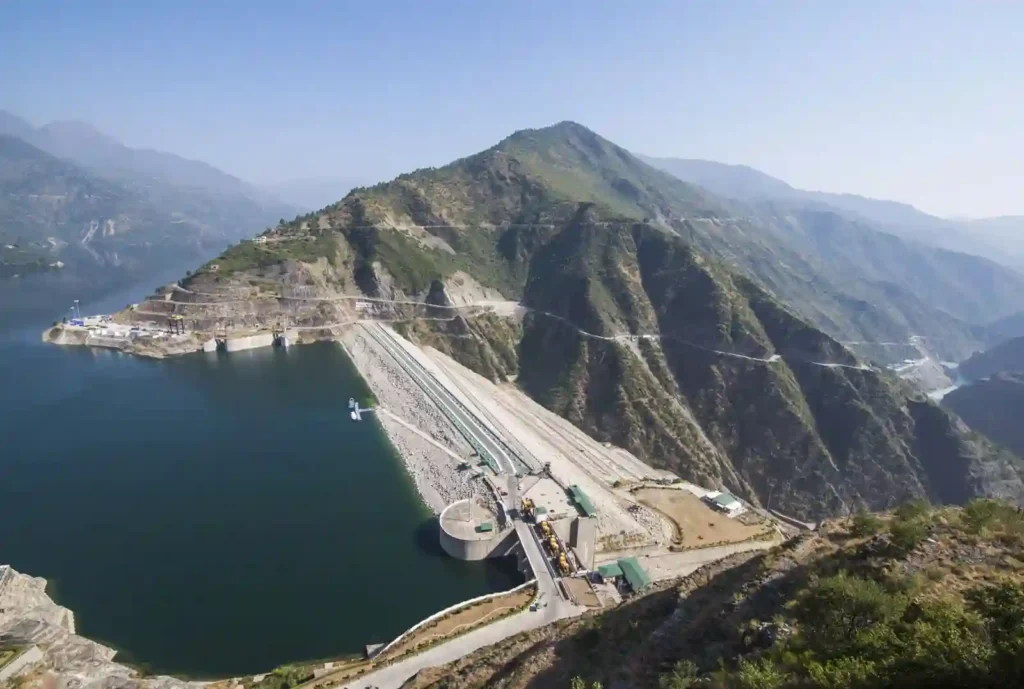
Tehri Dam on the Bhagirathi River in Uttarakhand is the tallest completed dam in India. The massive earth-and-rock-fill embankment rises about 260.5 metres above its foundation and stretches roughly 575 metres across the valley near New Tehri.
The dam forms the Tehri Reservoir and is the centrepiece of the Tehri Hydro Power Complex. The first stage has an installed generation capacity of 1,000 MW, while the broader project also includes pumped-storage and downstream hydropower development. Water from the project supports irrigation and drinking-water supply in northern India.
Its extraordinary height, mountainous setting and enormous embankment make Tehri one of India’s most impressive civil-engineering projects. Construction and resettlement also made it one of the country’s most debated dam projects, particularly because old Tehri town was submerged by the reservoir.
2. Bhakra Dam, Himachal Pradesh – 225.55 Metres
Bhakra Dam is a concrete gravity dam on the Sutlej River near the Himachal Pradesh-Punjab border. Bhakra Beas Management Board lists its height above the deepest foundation at 225.55 metres, making it the second-tallest completed dam in India by this measure.
Completed in the early 1960s, the dam created the huge Gobind Sagar reservoir. Its two power houses together have an installed capacity of more than 1,400 MW, while the wider Bhakra-Nangal system supplies irrigation and electricity to several northern states.
Bhakra became one of the great symbols of India’s post-Independence infrastructure programme. Its combination of height, reservoir capacity and agricultural importance means it remains one of the country’s most significant multipurpose dams more than six decades after completion.
3. Idukki Arch Dam, Kerala – 168.91 Metres
Idukki Dam in Kerala is one of India’s most distinctive large dams because of its double-curvature arch design. Built across the Periyar River between the Kuravan and Kurathi hills, it reaches about 168.91 metres above its lowest foundation.
The dam forms part of the Idukki Hydroelectric Project together with the Cheruthoni and Kulamavu dams. These structures create a common reservoir that feeds the underground Moolamattom power station, one of Kerala’s most important hydroelectric facilities.
Unlike a massive earth embankment such as Tehri, an arch dam transfers water pressure into the rock walls on both sides of the gorge. Idukki’s narrow valley, dramatic curved wall and major role in Kerala’s electricity system make it one of India’s best-known engineering landmarks.
4. Koldam, Himachal Pradesh – 167 Metres
Koldam Hydro Power Station on the Sutlej River is one of India’s tallest modern embankment dams. NTPC records the maximum dam height at 167 metres. The rock-and-gravel-fill structure with a central clay core is located in Himachal Pradesh, mainly around Bilaspur and Mandi districts.
The project entered commercial operation in 2015 and supports an 800 MW surface power station with four 200 MW generating units. Its reservoir is smaller than the great storage reservoirs associated with Bhakra or Sardar Sarovar, because Koldam was designed primarily for hydroelectric generation.
Koldam’s height places it among the country’s largest dams even though it is less famous among tourists. The project also demonstrates how newer Himalayan hydropower developments use deep river valleys to create substantial hydraulic head without requiring one of India’s largest reservoirs by area.
5. Sardar Sarovar Dam, Gujarat – 163 Metres Above Foundation
Sardar Sarovar Dam is a huge concrete gravity structure across the Narmada River near Kevadia in Gujarat. The Central Water and Power Research Station gives its maximum height as 163 metres above the deepest foundation. The more familiar visible height above the riverbed and final crest level is commonly stated as about 138.68 metres.
The dam is approximately 1.2 kilometres long and forms the Sardar Sarovar Reservoir. Its enormous canal and pipeline network was designed to supply irrigation and drinking water across large parts of Gujarat and Rajasthan, while the project’s power houses provide 1,450 MW of installed hydroelectric capacity.
Sardar Sarovar’s importance goes far beyond its height. It is one of India’s largest water-transfer projects, with a vast command area and a canal system extending into water-scarce regions. At the same time, its construction became the centre of decades of debate over displacement, rehabilitation and environmental impact.
6. Ranjit Sagar Dam, Punjab/Jammu and Kashmir – 160 Metres
Ranjit Sagar Dam, also known as Thein Dam, is built across the Ravi River near Pathankot. Punjab State Power Corporation records its maximum structural height at 160 metres, placing it among the tallest completed dams in India.
The earth-fill dam creates the Ranjit Sagar Reservoir, with a gross storage capacity of about 3,280 million cubic metres. Its four generating units provide 600 MW of installed hydropower capacity, while stored water also supports irrigation and regulation of the Ravi system.
The reservoir spreads across areas adjoining Punjab, Himachal Pradesh and Jammu and Kashmir, giving the project a multi-state geographical character. Its tall embankment and large storage make Ranjit Sagar one of northern India’s most important multipurpose water projects.
7. Srisailam Dam, Andhra Pradesh/Telangana – About 145 Metres
Srisailam Dam stands across the Krishna River between Andhra Pradesh and Telangana in the Nallamala Hills. The National Register of Specified Dams lists the structure at about 145 metres in height, while detailed project data give roughly 143 metres above the deepest foundation depending on the measurement reference used.
The dam is 512 metres long and creates the huge Srisailam Reservoir. Its left- and right-bank power stations together provide around 1,670 MW of installed generating capacity, making Srisailam one of India’s largest hydroelectric complexes.
Its reservoir is also important for irrigation, water supply and regulation of Krishna River flows. Because it combines a tall concrete structure with a very large reservoir and major power generation, Srisailam ranks among India’s most consequential dams even beyond its position in a height-based list.
8. Baglihar Dam, Jammu and Kashmir – 143 Metres
Baglihar Dam is a concrete gravity dam on the Chenab River in the Ramban area of Jammu and Kashmir. India’s National Register of Specified Dams lists its height above the lowest foundation at 143 metres and its crest length at about 363 metres.
The dam supports the Baglihar Hydroelectric Power Project, developed in two stages with a total installed capacity of 900 MW. Unlike large irrigation reservoirs, Baglihar is primarily a run-of-river hydroelectric project, so its reservoir storage is comparatively limited.
The project is particularly notable because the Chenab is part of the Indus river system governed by the Indus Waters Treaty. Technical aspects of Baglihar were once the subject of a dispute between India and Pakistan, giving the dam an international dimension in addition to its engineering importance.
9. Chamera I Dam, Himachal Pradesh – 140 Metres
Chamera I is a 140-metre-high concrete arch-gravity dam across the Ravi River in Himachal Pradesh’s Chamba region. NHPC operates the project, which entered commercial service in 1994.
The dam is about 295 metres long and supplies water to an underground hydropower system with an installed capacity of 540 MW. The project uses tunnels and high hydraulic head to generate electricity before returning the water to the Ravi downstream.
Chamera I is considerably smaller in reservoir volume than many famous multipurpose dams, yet its 140-metre structural height puts it among India’s tallest completed dams. It is an example of the deep-valley hydroelectric projects that are especially common across the western Himalayas.
10. Cheruthoni Dam, Kerala – 138.38 Metres
Cheruthoni Dam in Kerala completes the top ten with a height of about 138.38 metres. It is a straight concrete gravity dam built across the Cheruthoni River and forms part of the same Idukki reservoir system as the Idukki Arch Dam and Kulamavu Dam.
Kerala State Electricity Board describes Cheruthoni as the largest straight gravity concrete dam in the state. It is about 651 metres long and, unlike the Idukki Arch Dam, contains radial spillway gates used to release excess reservoir water.
Its role is essential to the Idukki Hydroelectric Project because all three dams work together to impound the reservoir. Cheruthoni is therefore both a major structure in its own right and part of one of India’s most unusual multi-dam hydroelectric systems.
What Does ‘Biggest Dam’ Actually Mean?
Dam rankings can change completely depending on the measurement used. Tehri is India’s tallest completed dam, but Hirakud in Odisha is famous for its enormous overall length. Indira Sagar in Madhya Pradesh stands out for reservoir storage, while Nagarjuna Sagar and Srisailam are among the country’s great large-reservoir and hydroelectric projects.
Height itself can also be quoted in different ways. Engineers may measure from the lowest foundation, from the deepest foundation or from the riverbed. Sardar Sarovar is a good example: its maximum structural height above the foundation is about 163 metres, while the widely quoted height above the riverbed is 138.68 metres.
For a fair Top 10 ranking, this article therefore uses maximum structural height above the foundation wherever official dam records provide it. Storage, length and power capacity are included as additional context rather than mixed into the ranking formula.
Final Word
India’s biggest dams show the enormous variety of the country’s water infrastructure. Tehri towers over a Himalayan valley, Bhakra became an icon of post-Independence development, Idukki demonstrates elegant arch-dam engineering, and Sardar Sarovar connects a major reservoir with one of India’s most ambitious water-distribution networks.
These structures are far more than records of height. They influence electricity generation, irrigation, drinking-water supply, flood management and the lives of millions of people. Their scale also explains why dam safety, environmental management and responsible operation remain as important as the engineering achievements that created them.