Innovation is not simply about spending billions on research or launching a new product every year. The companies that truly change the world create technologies that reshape entire industries, alter everyday behaviour and force competitors to rethink what is possible.
Artificial intelligence is driving much of today’s technological transformation, but innovation is also accelerating in semiconductors, spaceflight, electric vehicles, robotics, batteries and cloud computing. Google, Nvidia and OpenAI are pushing the boundaries of AI, while SpaceX is reinventing access to space and BYD is attacking some of the biggest limitations of electric vehicles.
There is no single universally accepted formula for ranking innovation. This list takes a broader research-based approach, considering recent technological breakthroughs, originality, global impact, commercial scale and the potential to transform future industries.
Let’s check out the top 10 list of the most innovative companies in the world.
1. Google
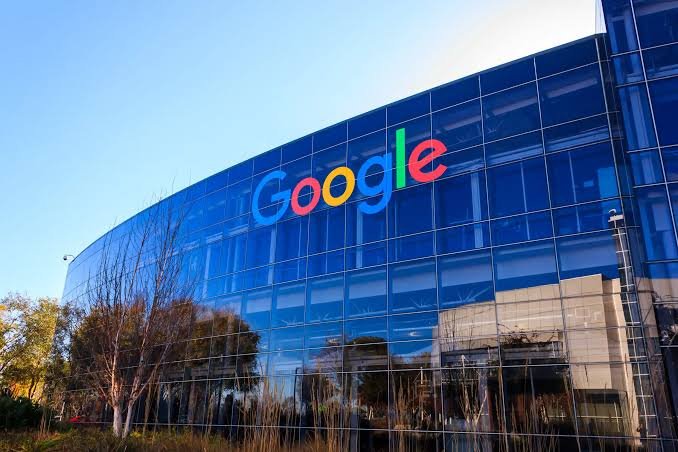
Google takes the top position because few companies are innovating across as many important technologies at the same time.
Artificial intelligence remains at the centre of its strategy. In 2026, Google introduced new Gemini models including Gemini 3.5 and Gemini Omni, while expanding AI agents across Search, the Gemini app, development tools and other products. Gemini now reaches hundreds of millions of users worldwide.
Google is also making significant advances in robotics, quantum computing and AI-powered consumer devices. Its ability to combine research from Google DeepMind with products such as Search, Android, YouTube and Cloud allows breakthroughs to reach an enormous global audience.
What makes Google particularly innovative is its breadth. It is simultaneously working on AI models, autonomous agents, robotics, quantum computing, healthcare technology and intelligent hardware rather than relying on one major product.
2. Nvidia
Nvidia has become one of the most important companies behind the artificial-intelligence revolution.
Its GPUs provide much of the computing power required to train and operate advanced AI models, but Nvidia has evolved far beyond being simply a graphics-chip manufacturer.
Its new Vera Rubin platform combines specialised GPUs, CPUs, networking and other components into enormous AI computing systems. Nvidia says the platform can deliver dramatically greater agentic-AI performance and lower inference costs than its previous Blackwell generation.
Nvidia’s biggest achievement is building an entire ecosystem around AI computing. Hardware, networking, CUDA software and developer tools work together, making Nvidia infrastructure central to many of the world’s largest AI projects.
3. OpenAI
OpenAI deserves a place near the very top because few companies have changed public interaction with technology as dramatically in such a short period.
The launch of ChatGPT helped transform generative AI from a specialist technology into a mainstream tool used for writing, programming, research, education, analysis and everyday problem-solving.
OpenAI has continued advancing its technology. In 2026, it introduced the GPT-5.6 family, with stronger performance in coding, knowledge work, science and cybersecurity, alongside advances in voice, agents, memory and specialised scientific AI systems.
Its influence extends beyond its own products. The success of ChatGPT accelerated investment in generative AI across Google, Microsoft, Meta, Anthropic and countless startups.
OpenAI’s importance therefore comes not only from individual models but from helping trigger one of the largest technology shifts since the arrival of smartphones and cloud computing.
4. SpaceX
SpaceX has fundamentally changed the economics of spaceflight by making rocket reuse a routine part of orbital launches.
Its Falcon 9 boosters can fly repeatedly instead of being discarded after a single mission. In August 2026, one Falcon 9 booster completed its 37th flight, demonstrating a level of rocket reuse that would have seemed extraordinary only a decade earlier.
SpaceX is now pursuing an even more ambitious objective with Starship, designed as a fully reusable heavy-lift launch system. The company is also expanding Starlink, its enormous low-Earth-orbit satellite network.
If Starship eventually achieves rapid and reliable full reuse, it could significantly reduce the cost of transporting satellites, cargo and eventually people into space.
Few companies have challenged an established industry as aggressively as SpaceX has challenged traditional aerospace.
5. Microsoft
Microsoft has successfully reinvented itself several times, moving from desktop software to cloud computing and now into artificial intelligence.
Its Copilot strategy is integrating AI directly into Word, Excel, PowerPoint, Teams, GitHub and other tools used by businesses worldwide.
Microsoft reported more than 20 million paid Microsoft 365 Copilot seats during its 2026 fiscal year, while new agent-based systems can increasingly perform longer, multi-step tasks rather than merely answering questions.
The company is also working on scientific AI and quantum computing. Microsoft’s research extends from AI-assisted drug and materials discovery to new generations of quantum hardware.
Its biggest advantage is distribution: Microsoft can place new AI capabilities directly into software already used daily by hundreds of millions of workers.
6. BYD
Chinese electric-vehicle manufacturer BYD has emerged as one of the world’s most important automotive innovators.
Its greatest strengths are battery technology, vertical integration and the ability to manufacture electric vehicles on an enormous scale.
In 2026, BYD unveiled its second-generation Blade Battery and FLASH Charging technology, capable of charging a battery from 10% to 70% in about five minutes and reaching 97% in approximately nine minutes under specified conditions.
Such charging speeds directly address one of the biggest disadvantages traditionally associated with electric vehicles: the time required to recharge compared with filling a petrol tank.
BYD also develops many of its own batteries, motors, electronics and semiconductor components, giving it unusually strong control over the EV supply chain.
7. Anthropic
Anthropic has become one of the strongest challengers in frontier artificial intelligence.
Its Claude models are widely used for programming, research, business tasks and complex reasoning, while Claude Code has helped establish agentic AI as a serious software-development tool.
Anthropic continued expanding this approach in 2026 with new Claude models designed to handle longer-running tasks, larger software projects and professional workflows.
The company also places significant emphasis on AI safety, model behaviour and reliability.
Anthropic’s rapid rise demonstrates how quickly a relatively young company can challenge technology giants when it combines strong research with products that solve practical problems.
8. Amazon
Amazon remains innovative because it continuously reinvents both digital infrastructure and the physical movement of goods.
AWS has developed its own processors, including Trainium AI chips and Graviton CPUs, reducing dependence on traditional third-party computing hardware. Amazon says Trainium has attracted major commitments from leading AI companies, including OpenAI and Anthropic.
Amazon is simultaneously advancing warehouse automation, robotics and artificial intelligence. Its fulfilment network has become a testing ground for machines and software designed to move, sort and deliver products more efficiently.
The company’s innovation therefore operates at two enormous scales: cloud computing through AWS and physical commerce through one of the world’s most sophisticated logistics systems.
9. Tesla
Tesla remains one of the most influential technology-focused automotive companies despite increasingly intense competition in the EV market.
Its innovation now extends well beyond electric cars. Tesla is investing heavily in Full Self-Driving software, Robotaxi services, the Cybercab, Optimus humanoid robots, AI computing and large-scale battery storage.
Tesla helped prove that electric cars could combine long range, strong performance, attractive design and software-based features. Its direct-to-consumer updates and extensive fast-charging network also influenced how the wider automotive industry approaches EVs.
The company’s next major challenge is turning its ambitious autonomy and robotics programmes into reliable products that can operate at mass-market scale.
10. Databricks
Databricks completes the top ten because data has become one of the most important foundations of artificial intelligence.
The company developed its Lakehouse approach to combine large-scale data storage, analytics and machine learning within a more unified platform.
More recently, Databricks has expanded into AI agents through Agent Bricks, which allows businesses to build specialised assistants and multi-agent systems using their own organisational data.
Its technology can also process documents, images and other unstructured information and turn them into structured data that AI applications can use.
As businesses increasingly move from experimenting with AI to deploying it throughout their organisations, platforms capable of securely connecting AI with enterprise data are becoming increasingly important.
What Makes the World’s Most Innovative Companies Stand Out?
The companies leading global innovation share several important qualities.
They create new markets: OpenAI helped establish mainstream generative AI, while SpaceX transformed commercial launch services.
They solve difficult technical problems: Nvidia tackles AI computing, BYD focuses on batteries and charging, and Tesla is pursuing autonomy and robotics.
They innovate at scale: Google, Microsoft and Amazon can place new technologies in front of hundreds of millions of users.
They build ecosystems: Nvidia combines chips and software, while Microsoft connects cloud infrastructure, productivity applications and AI agents.
They invest for the long term: Quantum computing, humanoid robots, reusable spacecraft and frontier AI require years of research before commercial success is guaranteed.
They force competitors to respond: Perhaps the clearest sign of genuine innovation is when an entire industry changes direction because of what one company has created.
Final Word
The world’s most innovative companies are increasingly building technologies that would have seemed like science fiction only a few years ago. Artificial intelligence dominates the transformation, but spaceflight, robotics, electric mobility and advanced computing are progressing just as rapidly.
Google takes the top position for the extraordinary breadth of its innovation, followed by Nvidia and OpenAI at No. 3. OpenAI’s role in bringing generative AI into everyday life through ChatGPT makes it impossible to leave the company out of any serious discussion of the world’s leading innovators.