Long before modern nations existed, people began gathering in permanent settlements, cultivating land, trading over long distances and building organised societies. Eventually, some of these communities developed cities, governments, social hierarchies, monumental architecture and systems of record-keeping—features that historians commonly associate with the emergence of civilization.
Determining exactly which civilization is the oldest is not completely straightforward. Archaeologists continually discover earlier settlements, while the transition from a farming culture to a true urban civilization happened gradually rather than on a single date. This ranking therefore uses the approximate period when each society developed recognisable urban, political or state-level complexity, rather than the date of its earliest farming village.
Mesopotamia produced some of humanity’s earliest true cities, while Egypt soon created one of the world’s first unified territorial states. Independent centres of civilization later emerged in South Asia, China and the Americas.
Let’s check out the top 10 list of the oldest civilizations in the world.
1. Sumerian Civilization – Around 3500–3200 BCE
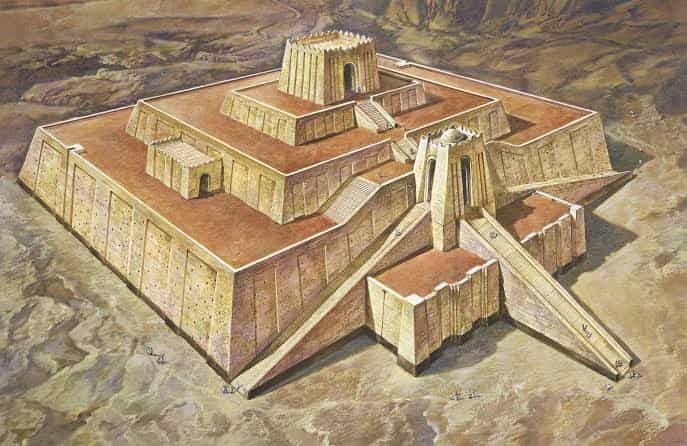
The Sumerian civilization of southern Mesopotamia, in present-day Iraq, is generally regarded as the earliest major urban civilization in recorded history.
During the fourth millennium BCE, settlements such as Uruk expanded into true cities with temples, organised labour, administration and increasingly complex economies. By around 3200 BCE, Uruk was possibly the largest settlement anywhere in the world.
The Sumerians made some of humanity’s most important early advances. Administrative pictographs gradually developed into cuneiform writing, while irrigation supported large agricultural communities in the fertile lands between the Tigris and Euphrates rivers.
Sumer was divided into city-states such as Uruk, Ur, Eridu and Lagash rather than being a single united kingdom. Nevertheless, its development of cities, writing, monumental temples and formal government helped establish many features later associated with civilization.
2. Ancient Egyptian Civilization – Around 3100 BCE
Ancient Egypt developed along the Nile River and became one of the longest-lasting civilizations in human history.
Farming communities had existed along the Nile for thousands of years, but a decisive transformation occurred around 3100 BCE, when Upper and Lower Egypt became politically unified under a single pharaoh. This marks the beginning of Egypt’s Early Dynastic Period.
The Egyptians developed hieroglyphic writing, organised government, mathematics, medicine, irrigation and extraordinary architectural skills. Their belief in the afterlife led to elaborate tombs and eventually the construction of the great pyramids.
The civilization survived through numerous dynasties and periods of political change for almost three millennia, leaving behind one of the richest archaeological records of the ancient world.
3. Minoan Civilization – Around 3000 BCE
The Minoan civilization developed on the Mediterranean island of Crete and is often described as Europe’s earliest advanced civilization.
Its roots can be traced to around 3000 BCE, although the civilisation reached its greatest level of political and architectural complexity much later, particularly after the development of palace centres around 1900 BCE.
Knossos, Phaistos, Malia and Zakros became important centres containing large palace complexes, workshops, storage areas and sophisticated drainage systems.
The Minoans were skilled sailors and merchants who traded throughout the eastern Mediterranean. They created impressive frescoes, jewellery and pottery and used writing systems including Cretan hieroglyphs and Linear A, which has still not been completely deciphered.
Minoan influence later played an important role in the development of Mycenaean Greek culture.
4. Norte Chico–Caral Civilization – Around 3000 BCE
The Norte Chico civilization, also called the Caral-Supe civilization, emerged along the Pacific coast of present-day Peru around 3000 BCE.
Its importance is extraordinary because it developed independently, thousands of kilometres from the early civilizations of Mesopotamia, Egypt and South Asia.
The Sacred City of Caral contained monumental platform structures, sunken circular courts, organised residential areas and evidence of a complex social system. UNESCO describes Caral as the oldest known centre of civilization in the Americas.
Unlike many other early civilizations, Caral appears to have developed without pottery during much of its early history. Agriculture, fishing and trade between coastal and inland communities supported its economy.
The civilization flourished for more than a thousand years and influenced later societies throughout the central Andes.
5. Elamite Civilization – Around 2700 BCE
The Elamite civilization developed in what is now southwestern Iran, particularly around the important ancient centre of Susa.
The Old Elamite period is generally dated from around 2700 BCE, although earlier Proto-Elamite culture and writing appeared several centuries before this.
Elam occupied a strategic region between Mesopotamia and the Iranian Plateau. This position encouraged trade and cultural exchange but also resulted in frequent warfare with neighbouring Mesopotamian powers.
The Elamites developed their own language, political institutions, religious traditions and artistic styles. They also adopted and adapted cuneiform writing for the Elamite language.
Elam survived in different political forms for more than two thousand years before becoming absorbed into the expanding Persian world.
6. Indus Valley Civilization – Around 2600 BCE
The Indus Valley Civilization, also known as the Harappan Civilization, became one of the largest urban societies of the ancient world.
Its roots extend much farther back, with early Harappan communities developing from around 3300 BCE and increasingly urban settlements appearing before 2600 BCE. However, the great integrated urban civilization usually called the Mature Harappan phase flourished from approximately 2600 to 1900 BCE.
Major cities such as Mohenjo-daro, Harappa and Dholavira displayed remarkably sophisticated urban planning. Streets were laid out systematically, bricks followed standard dimensions, and many homes were connected to advanced drainage and wastewater systems.
The civilization also used standardised weights, developed extensive trading networks and employed a still-undeciphered script.
Its enormous geographical extent covered large parts of present-day Pakistan and northwestern India, making it considerably larger than many contemporary civilizations.
7. Kerma Civilization – Around 2500 BCE
The Kerma civilization developed in ancient Nubia, centred in what is now northern Sudan.
By around 2500 BCE, Kerma had developed into an important kingdom controlling trade along the Nile between central Africa and ancient Egypt. The Metropolitan Museum of Art identifies it as one of the earliest Nubian kingdoms.
Kerma became wealthy through trade in products including gold, ivory, livestock and other valuable materials moving north towards Egypt.
Its rulers constructed enormous burial mounds, while monumental mud-brick buildings known as deffufas became distinctive features of the capital.
The civilization also produced exceptionally fine pottery and eventually became powerful enough to challenge Egyptian influence in Nubia before Egypt conquered the region during the New Kingdom.
8. Ancient Chinese Civilization – Around 1900–1600 BCE
Chinese civilization developed from numerous Neolithic cultures that had existed for thousands of years along the Yellow and Yangtze river systems.
Cultures such as Liangzhu and Longshan already displayed sophisticated social organisation before 2000 BCE. However, the earliest Chinese dynasty confirmed through both archaeological and written evidence is the Shang dynasty, established around 1600 BCE.
The Shang created major urban centres, developed highly sophisticated bronze casting and maintained an organised royal government.
Their oracle-bone inscriptions provide the earliest substantial body of Chinese writing and reveal information about warfare, religion, agriculture and royal decision-making.
Many elements developed during these early periods—including writing, ancestor worship and centralised kingship—continued to influence Chinese civilization for thousands of years.
9. Mycenaean Civilization – Around 1600 BCE
The Mycenaean civilization emerged on mainland Greece around 1600 BCE and became the dominant power of the Late Bronze Age Aegean.
Centres including Mycenae, Tiryns and Pylos contained fortified palaces controlled by powerful warrior elites. Archaeological discoveries reveal considerable wealth through gold jewellery, weapons, pottery and monumental tombs.
The Mycenaeans were skilled engineers who built enormous stone fortifications, bridges and sophisticated drainage systems.
They also adopted and modified elements of Minoan culture. Their scribes used Linear B, adapted from the earlier Minoan Linear A script, to record an early form of the Greek language.
Mycenaean civilization declined around 1200 BCE during the wider Bronze Age collapse, but its traditions later became intertwined with the legendary world remembered in Greek stories such as the Iliad and Odyssey.
10. Olmec Civilization – Around 1200 BCE
The Olmec civilization emerged in present-day southern Mexico around 1200 BCE and became one of the earliest major civilizations of Mesoamerica.
Its principal centres included San Lorenzo and La Venta, where archaeologists have discovered ceremonial complexes, sculptures and evidence of organised political and religious life.
The Olmecs are especially famous for their enormous colossal stone heads, some weighing many tonnes. Transporting and carving these monuments required considerable organisation and specialised labour.
Olmec society flourished approximately between 1200 and 400 BCE and influenced many later Mesoamerican cultural traditions.
Although the Maya and Aztec civilizations eventually became more famous, the Olmecs appeared centuries earlier and played an important formative role in the development of complex societies in Mesoamerica.
What Made the Earliest Civilizations Possible?
The world’s earliest civilizations developed independently in different regions, but several factors repeatedly helped complex societies emerge.
Agriculture: Reliable food production allowed populations to settle permanently and support people who were not farmers.
Rivers and fertile land: The Nile, Tigris-Euphrates and Indus systems provided water, fertile soil and transportation routes.
Cities: Growing populations created centres for government, religion, manufacturing and trade.
Organised government: Large communities required systems for managing agriculture, defence, taxation and public works.
Writing and record-keeping: Early writing helped governments track goods, labour, taxes and religious activities.
Trade: Long-distance exchange supplied valuable materials and connected civilizations with neighbouring cultures.
Specialised labour: Agricultural surpluses allowed societies to support builders, merchants, soldiers, priests, artists and administrators.
Monumental construction: Temples, palaces, pyramids and public buildings reflected both technical capability and organised political power.
Final Word
The rise of civilization was not a single event but a transformation that occurred independently in several parts of the world. Sumerian Mesopotamia produced the earliest clearly documented large cities, while Egypt soon created a unified state whose monuments still survive more than five thousand years later.
The Indus, Caral, Chinese, Minoan, Nubian and Olmec civilizations show that complex societies could emerge under very different environmental and cultural conditions. Together, these ancient civilizations laid many of the foundations for urban life, government, writing, trade and organised society that continue to shape the modern world.