Intelligence at the country level cannot be reduced to a single IQ number. A more useful comparison looks at how well students perform in mathematics, reading and science—skills that reflect reasoning, problem-solving and the strength of an education system.
For this ranking, the latest fully available OECD PISA results are used. PISA tests 15-year-old students across dozens of countries and economies in mathematics, reading and science. Singapore led every one of these subjects in the 2022 assessment. The next PISA results are scheduled for release on September 8, 2026, so PISA 2022 remains the latest complete dataset as of August 31, 2026.
The ranking below focuses on sovereign countries and uses their overall performance across the three PISA subjects rather than relying on disputed national IQ estimates. Let’s check out the top 10 list of the smartest countries in the world.
1. Singapore – Average PISA Score: About 560
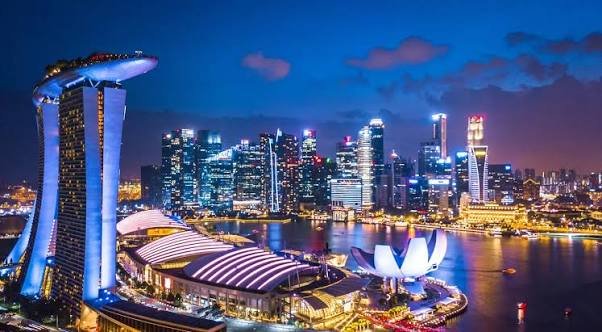
Singapore comfortably takes first place, with scores of 575 in mathematics, 543 in reading and 561 in science.
The country ranked first among all participating education systems in each of the three core PISA subjects. Around 92% of Singaporean students reached at least basic proficiency in mathematics, compared with an OECD average of 69%.
Singapore’s education system places strong emphasis on mathematics, science, problem-solving and teacher quality. Schools follow a demanding national curriculum, while students are encouraged to master concepts before moving to more advanced work.
Its performance is particularly impressive because Singapore does not simply lead in one area. It combines exceptional mathematical ability with very strong reading comprehension and scientific reasoning.
2. Japan – Average PISA Score: 533
Japan ranks second, with 536 points in mathematics, 516 in reading and 547 in science.
Its science score was among the highest in the entire PISA assessment, while Japanese students also performed exceptionally well in mathematics and reading.
Japanese education is known for strong foundations in mathematics and science, disciplined classroom environments and considerable emphasis on independent responsibility. Students typically develop core numeracy and literacy skills from an early age.
Japan also combines high average performance with relatively low numbers of students failing to reach basic proficiency, making its results strong across a broad section of the student population.
3. South Korea – Average PISA Score: About 523
South Korea remains one of the world’s strongest academic performers, scoring 527 in mathematics, 515 in reading and 528 in science.
Around 23% of Korean students reached the highest proficiency levels in mathematics, compared with an OECD average of only 9%.
Education has enormous social importance in South Korea. Students commonly spend long hours studying, and competition for places at leading universities is intense.
The country’s strength is particularly visible in mathematics, technology and science. South Korea has also built one of the world’s most advanced technology economies, with global companies operating in semiconductors, electronics, telecommunications and engineering.
4. Estonia – Average PISA Score: About 516
Estonia is Europe’s strongest performer in this comparison, with 510 points in mathematics, 511 in reading and 526 in science.
Its students scored comfortably above OECD averages in all three subjects. Around 85% reached at least basic proficiency in mathematics, while 13% qualified as top mathematical performers.
Estonia’s achievement is particularly notable because it has a relatively small population and does not spend at the same scale as some larger wealthy countries.
Its schools combine strong teacher preparation with digital technology and relatively high educational equality. Estonia has also developed a reputation for digital government, technology startups and advanced online public services.
5. Canada – Average PISA Score: About 506
Canada ranks fifth with scores of 497 in mathematics, 507 in reading and 515 in science.
Canadian students performed above the OECD average across every core PISA subject. Around 12% were top performers in mathematics, and the country also achieved particularly strong results in science.
One of Canada’s strengths is that high academic performance exists within an extremely diverse population. Its education system is decentralised, with provinces controlling schools rather than a single national education authority.
Canada also combines academic achievement with strong universities, scientific research and a knowledge-based economy, helping it maintain a high level of educational performance.
6. Ireland – Average PISA Score: 504
Ireland performs particularly strongly in reading, where its students achieved 516 points. It also scored 492 in mathematics and 504 in science.
Ireland recorded one of the strongest reading results among participating countries and significantly exceeded OECD averages across all three subjects.
The country has invested heavily in education while developing into a major European centre for technology, pharmaceuticals and financial services.
Ireland’s high reading score is especially significant because strong literacy supports learning across almost every other academic subject, from science to social studies.
7. Switzerland – Average PISA Score: 498
Switzerland combines one of Europe’s strongest mathematics performances with solid reading and science results.
Swiss students scored 508 in mathematics, 483 in reading and 503 in science. Around 16% reached the highest mathematical proficiency levels, considerably above the OECD average.
Switzerland’s education system is unusual because academic schooling exists alongside a highly developed vocational education and apprenticeship network.
That approach produces strong academic students while also creating technically skilled workers for industries such as engineering, pharmaceuticals, banking and advanced manufacturing.
8. Australia – Average PISA Score: About 497
Australia ranks eighth with 487 points in mathematics, 498 in reading and 507 in science.
All three scores remain above OECD averages, and Australian students perform particularly well in science and reading.
Australia has a large network of respected universities and research institutions, while its schools place increasing emphasis on science, technology, engineering and mathematics.
The country has experienced a long-term decline in some PISA scores, however, which has generated debate about educational standards and how to improve mathematics performance. Even with that decline, Australia remains among the strongest overall performers internationally.
9. Finland – Average PISA Score: 495
Finland has long been regarded as one of the world’s most admired education systems and remains in the global top ten.
Finnish students scored 484 in mathematics, 490 in reading and 511 in science. Science remains its strongest PISA subject.
Finland became famous for an education model built around highly trained teachers, relatively limited standardised testing and a strong focus on equal opportunity.
Its scores have declined from the exceptional levels achieved in earlier PISA assessments, particularly in mathematics and reading. Even so, Finland continues to outperform OECD averages across all three major areas.
10. New Zealand – Average PISA Score: About 495
New Zealand completes the top ten with 479 points in mathematics, 501 in reading and 504 in science.
Its strongest area is reading, while science performance also remains clearly above the OECD average.
New Zealand’s education system encourages independent thinking, communication and problem-solving alongside traditional academic subjects.
The country also performs strongly in university education and scientific research relative to its small population. Its combination of solid literacy and science results places it narrowly ahead of several other high-performing countries in the overall three-subject comparison.
What Makes the World’s Smartest Countries Perform So Well?
Strong results usually come from a combination of education policy, family support and long-term investment rather than any single factor.
Strong mathematics and science education: Singapore, Japan and South Korea place particular emphasis on numerical reasoning and scientific understanding.
Highly trained teachers: Countries such as Finland, Singapore and Estonia invest heavily in teacher preparation and professional standards.
Early literacy: Strong reading skills make it easier for students to understand complex material in every other subject.
High educational expectations: Academic achievement has considerable social importance in several of the highest-performing Asian countries.
Equal access to education: Systems that ensure weaker or disadvantaged students do not fall too far behind can raise national performance.
Technology and innovation: Estonia, South Korea, Singapore and Japan connect strong education systems with highly developed technology sectors.
Problem-solving skills: Modern international assessments increasingly test whether students can apply knowledge rather than simply memorise facts.
It is important to remember that these rankings describe educational performance, not the inherent intelligence of an entire population. Individuals within every country vary enormously in ability, background and opportunity.
Final Word
The smartest countries in the world tend to combine strong schools, skilled teachers and cultures that value education. Singapore stands clearly at the top of the latest PISA results, while Japan, South Korea and Estonia also demonstrate exceptional performance across mathematics, reading and science.
The rankings may change once PISA 2025 results are released, but the broader pattern is clear: countries that invest consistently in teaching, literacy, science and problem-solving tend to produce some of the strongest student outcomes in the world.