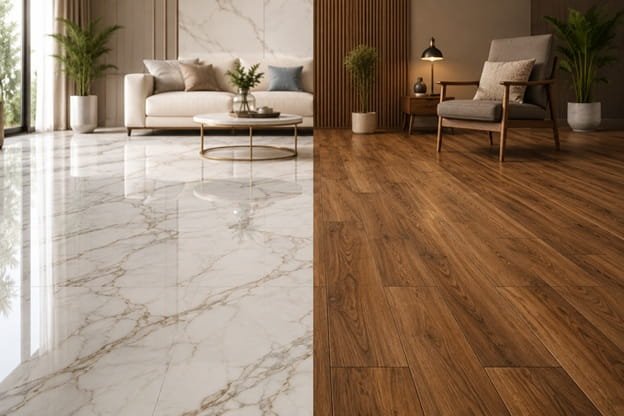
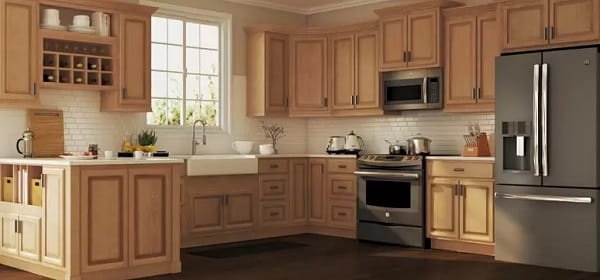
If you have ever spent an afternoon at a timber market or sat down with an interior designer to plan a wardrobe, you have likely heard the word ‘Sunmica‘ tossed around as a catch-all term for just about every decorative surface. It is one of those classic cases where a brand name becomes so famous that it replaces the actual name of the product in our daily vocabulary. It is a bit like how people say “Xerox” when they mean a photocopy or “Band-Aid” when they mean an adhesive bandage.
In the world of home interiors, this often leads to a bit of confusion. People frequently ask, “Should I buy Sunmica or should I go for a laminate?” The short answer is that they are not actually two different things. To think through it practically, Sunmica is a brand of laminate that became so iconic in India during the late 20th century that the name just stuck. Today, when you are looking for surfaces for your kitchen cabinets or bedroom furniture, what you are really looking for is a high-pressure laminate (HPL).
Understanding the Layers
To understand why this material is so ubiquitous, it helps to know what is actually happening inside that thin sheet. A laminate is essentially a sandwich of paper and plastic resins. You have layers of kraft paper soaked in phenolic resin, topped with a decorative paper that has the design or color, and finally a transparent “overlay” that protects everything from scratches and heat.
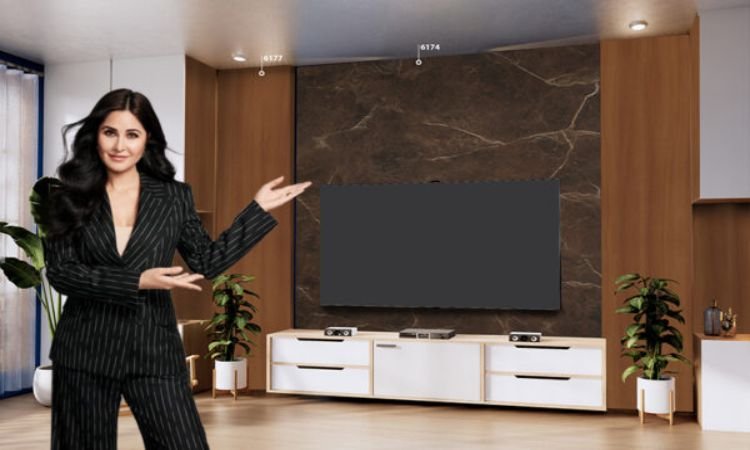
Advance Laminates has taken this basic “sandwich” and refined it over the years. By using high-quality resins and specialised decorative papers, they have moved beyond the basic wood grains of the past. Today, you can get laminates that feel like raw silk, look like Italian marble, or have the rugged texture of weathered stone. So, while the term used by your carpenter might be old-fashioned, the technology behind the modern sheets is incredibly advanced.
Why the Name Persists
A mild digression here: there is a reason why “Sunmica” became the household name in India. Back in the day, the Formica-Sun Group introduced these decorative sheets to a market that was used to expensive, high-maintenance solid wood. It was a revolution. Suddenly, you could have a teak-look table that didn’t stain when you spilt tea on it. It brought durability to the middle-class home.
Because it was the first major brand to dominate the market, the name became synonymous with the category. Even today, if you go to a shop and ask for Sunmica, the dealer will likely show you a range of brands, including Advance Laminates, because they know exactly what you are looking for. It is the language of the trade.
The Evolution of Choice
If you are wondering if there is a “quality” difference between the sunmica of twenty years ago and the laminates of 2026, the answer is a resounding yes. The industry has moved toward what we call “functional aesthetics”. It is no longer enough for a sheet to just look pretty; it has to solve problems.
For example, a modern laminate from a brand like Advance Laminates often comes with the following:
- Anti-Bacterial Properties: Very useful for kitchen countertops or children’s rooms where hygiene is a priority.
- Anti-Fingerprint Finishes: If you love the look of a sleek, matte black cabinet but hate seeing greasy smudge marks, this is a lifesaver.
- Thermal Resistance: These sheets are designed to withstand the heat of a hot coffee mug or the steam of a kitchen without bubbling or peeling.
Grounding the Practicalities
When you are actually out there making a choice for your home, don’t get hung up on the terminology. Whether your contractor calls it a laminate or a sunmica, focus on the technical specifications and the “feel” of the sheet.
One thing worth checking is the thickness. Standard high-quality sheets are usually 1.0mm or 1.2mm thick. Thinner sheets are available for the inside of cabinets, but for the external surfaces that people actually see and touch, the thicker sheets provide a much flatter, more premium finish. Thicker laminates are also less likely to show “telegraphing”, which is that slight waviness you sometimes see when a thin sheet is glued onto an uneven plywood surface.