The world’s richest people control fortunes larger than the annual economies of many countries. Technology companies, e-commerce, artificial intelligence, semiconductors and global retail have created a new generation of billionaires whose wealth can rise or fall by billions of dollars in a single trading day.
Technology dominates the list more than ever. Tesla, SpaceX, Google, Amazon, Meta, Oracle, Nvidia and Dell have helped create eight of today’s ten largest personal fortunes. The numbers are extraordinary: every person in the current top ten is worth close to $150 billion or more.
Net worth changes constantly because much of this wealth is held in publicly traded companies. The figures below are therefore based on Forbes’ real-time billionaire rankings as of August 31, 2026. Let’s check out the top 10 list of the richest person in the world.
1. Elon Musk – $873.1 Billion
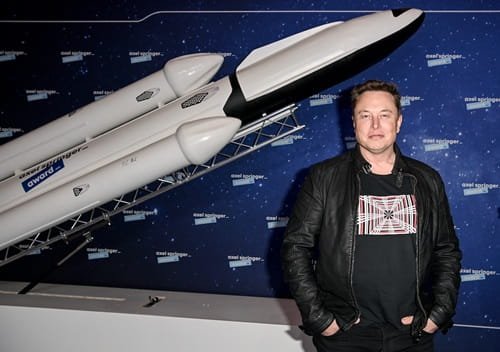
Elon Musk is currently the richest person in the world, with an estimated net worth of approximately $873.1 billion. His enormous fortune comes mainly from his interests in SpaceX and Tesla.
Musk helped build several major technology companies and has been closely associated with Tesla, SpaceX, xAI, X, Neuralink and The Boring Company. SpaceX has become particularly important to his wealth.
His fortune reached an extraordinary milestone in June 2026 when SpaceX went public. Forbes briefly estimated Musk’s wealth at more than $1 trillion, making him the first person ever to cross that level, before falling as the company’s share price declined.
Even after that decline, the gap remains enormous. Musk currently possesses more than three times the wealth of the world’s second-richest person.
2. Larry Page – $283 Billion
Google cofounder Larry Page ranks second with an estimated fortune of approximately $283 billion.
Page cofounded Google with Sergey Brin in 1998 while the two were graduate students at Stanford University. What began as a new way of organising internet search eventually developed into one of the most powerful technology businesses in the world.
Google was reorganised under parent company Alphabet in 2015. Page stepped down as Alphabet’s CEO in 2019 but remains a major shareholder and continues to benefit enormously from the company’s growth.
Artificial intelligence, digital advertising, YouTube, cloud computing and Google’s enormous search business have helped Alphabet remain one of the world’s most valuable companies, significantly increasing Page’s fortune.
3. Jeff Bezos – $273.5 Billion
Jeff Bezos, founder of Amazon, is the world’s third-richest person with an estimated net worth of approximately $273.5 billion.
Bezos founded Amazon in 1994 as an online bookstore operating from his garage. The company subsequently expanded into almost every major area of e-commerce and developed Amazon Web Services, now one of the world’s leading cloud-computing businesses.
He stepped down as Amazon CEO in 2021 but retained a substantial ownership interest in the company. Bezos has also invested heavily in Blue Origin, his private space company.
His wealth is therefore heavily influenced by Amazon’s share price, meaning billions can be added to or removed from his estimated fortune during major movements in the stock market.
4. Sergey Brin – $261.1 Billion
Sergey Brin, Google’s other cofounder, currently has an estimated net worth of approximately $261.1 billion, placing him fourth globally.
Brin met Larry Page while studying at Stanford, and together they developed the search technology that became Google. He later served as president of Alphabet before stepping away from the position in 2019.
Like Page, a large proportion of Brin’s fortune remains connected with Alphabet shares. Google’s dominance in search and advertising, combined with YouTube, cloud computing and rapidly expanding artificial-intelligence operations, has driven the value of those holdings dramatically higher.
Page and Brin together now occupy two of the four highest positions on the world’s wealth ranking.
5. Michael Dell – $240.4 Billion
Michael Dell has climbed dramatically through the global wealth rankings and currently holds an estimated fortune of $240.4 billion.
Dell founded his computer company in 1984 while still a university student. The business became famous for selling personal computers directly to customers and eventually developed into Dell Technologies, one of the world’s largest technology infrastructure companies.
His wealth also reflects investments made through his family investment firm, but his massive ownership position in Dell Technologies remains central to his fortune.
Demand for servers, data-centre infrastructure and technology needed to support the artificial-intelligence boom has helped lift Dell’s position substantially, taking him into the world’s top five richest people.
6. Mark Zuckerberg – $198.5 Billion
Mark Zuckerberg, cofounder and CEO of Meta Platforms, has an estimated net worth of approximately $198.5 billion.
Zuckerberg launched Facebook from his Harvard dormitory in 2004. The social network grew from a college project into a global technology company serving billions of users.
Meta now owns Facebook, Instagram, WhatsApp and Messenger and has invested enormous amounts in artificial intelligence, virtual reality and augmented-reality technology.
Zuckerberg owns a significant percentage of Meta, so his personal wealth moves closely with the company’s stock. Meta’s strong advertising business and renewed investor enthusiasm surrounding AI have helped keep him firmly among the world’s richest individuals.
7. Larry Ellison – $193.6 Billion
Oracle cofounder Larry Ellison ranks seventh with an estimated net worth of around $193.6 billion.
Ellison cofounded the software company that became Oracle in 1977. The business grew into one of the world’s most important providers of database software and enterprise technology.
He stepped down as Oracle CEO in 2014 but remains the company’s chairman and chief technology officer and continues to own a very large stake in the business.
Oracle’s growing cloud-computing operations and demand for infrastructure capable of supporting artificial-intelligence workloads have become increasingly important to its valuation. Ellison’s wealth has fluctuated dramatically with Oracle shares, at times moving him much higher in the global ranking.
8. Jensen Huang – $187.9 Billion
Jensen Huang, cofounder and CEO of Nvidia, has become one of the world’s richest people as the artificial-intelligence boom transformed the semiconductor industry. His fortune is currently estimated at approximately $187.9 billion.
Huang cofounded Nvidia in 1993. The company initially became famous for graphics processors used in gaming, but its GPUs later proved exceptionally valuable for artificial intelligence and high-performance computing.
The explosive global demand for AI chips has turned Nvidia into one of the world’s most valuable companies. Data centres operated by major technology firms increasingly rely on its processors to train and run advanced AI systems.
Because Huang retains a significant Nvidia shareholding, the company’s extraordinary rise has pushed his personal wealth into territory occupied by only a handful of people.
9. Steve Ballmer – $156.9 Billion
Former Microsoft CEO Steve Ballmer ranks ninth with an estimated fortune of approximately $156.9 billion.
Ballmer joined Microsoft in 1980 as one of its earliest business managers and eventually became CEO in 2000, succeeding Bill Gates. He led the company until 2014.
Unlike many founders on this list, Ballmer did not create Microsoft. Much of his wealth comes from the large amount of Microsoft stock he accumulated during his decades at the company.
Microsoft’s transformation into a cloud-computing and artificial-intelligence powerhouse has dramatically increased the value of those holdings. Ballmer is also well known as the owner of the NBA’s Los Angeles Clippers.
10. Amancio Ortega – $148.8 Billion
Spanish retail billionaire Amancio Ortega completes the top ten with an estimated fortune of approximately $148.8 billion.
Ortega cofounded the business that became Inditex, the global fashion group best known for Zara. Its fast-moving business model transformed the clothing industry by allowing new designs to move from concept to stores much faster than traditional fashion retailers.
He remains a major Inditex shareholder and has also invested substantial amounts of money in prime commercial real estate through his investment operations.
Ortega is notable because he is the only person in the current top ten whose primary fortune comes from fashion and retail rather than technology. His global Zara empire has made him one of Europe’s wealthiest individuals.
What Makes the World’s Richest People So Wealthy?
The world’s largest fortunes have several important characteristics in common.
Company ownership: Most billionaires on the list became extraordinarily wealthy because they retained substantial ownership in businesses that later became worth hundreds of billions or even trillions of dollars.
Technology: Eight of the current top ten have fortunes primarily connected with technology companies.
Artificial intelligence: Nvidia, Google, Meta, Oracle, Dell and other companies have benefited from enormous investment surrounding AI and data centres.
Stock-market growth: Billionaire net worth is usually based largely on the current market value of shares rather than cash sitting in a bank account.
Scalable businesses: Search engines, software, social networks, e-commerce and semiconductor businesses can serve billions of customers without expanding in the same way as traditional physical businesses.
Long-term ownership: Page, Brin, Bezos, Zuckerberg, Ellison and others retained major stakes in the companies they helped create, allowing them to participate in decades of growth.
Final Word
The world’s richest people are increasingly concentrated in technology, with Elon Musk holding an extraordinary lead over everyone else. Larry Page, Jeff Bezos and Sergey Brin follow, while the rise of Michael Dell and Jensen Huang demonstrates how artificial intelligence is reshaping billionaire wealth.
These rankings can change quickly, but one pattern is clear: ownership of successful global companies remains the most powerful route to creating fortunes measured in hundreds of billions of dollars.