The Delhi Metro Rail Corporation has transformed public transport in India’s capital. Every day, millions of people depend on it for fast and reliable travel. However, one common question still comes up: is Delhi Metro actually profitable?
Moreover, metro systems involve huge investments, so profit does not always come quickly. At the same time, they generate revenue through multiple channels beyond ticket sales. Therefore, understanding profitability requires a broader perspective.
What Does Profitability Mean for Metro Systems?
Before diving deeper, it helps to understand what “profitability” actually means. Metro systems earn revenue from fares, advertisements, and commercial activities. However, they also spend heavily on construction, maintenance, and operations.
Therefore, a metro system may cover its daily expenses but still carry long-term debt. In most cases, metro projects aim for sustainability rather than quick profit.
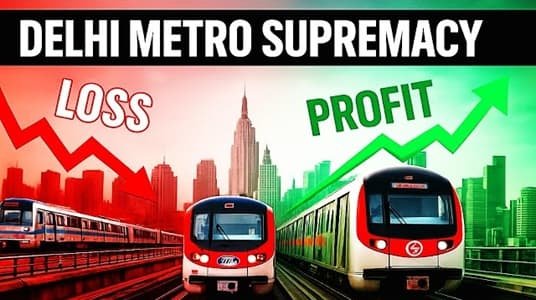
Is Delhi Metro Profitable Right Now?
Delhi Metro is considered operationally profitable. This means it earns enough revenue to cover its daily running costs.
For example, ticket fares and non-fare income generate steady earnings. Because of high ridership, revenue remains consistent. As a result, the system manages its operations efficiently.
However, when it comes to recovering full construction costs, the picture becomes more complex. Therefore, overall profitability depends on long-term financial planning.
Major Revenue Sources
1. Passenger Fares
Ticket fares form the main source of income. Daily commuters contribute significantly to overall revenue.
2. Advertising
Metro stations and trains display advertisements. As a result, companies pay for brand visibility.
3. Property Development
The metro earns from commercial spaces, offices, and retail outlets. Therefore, non-fare revenue plays a crucial role.
4. Parking and Services
Parking fees and additional services also add to total earnings. Although smaller, these sources still matter.
Why Delhi Metro Performs Better Than Many Systems
High Ridership
Delhi Metro serves millions of passengers daily. Therefore, steady demand ensures consistent revenue.
Efficient Management
The Delhi Metro Rail Corporation follows strict operational practices. As a result, costs remain controlled.
Diverse Revenue Streams
The system does not rely only on fares. Instead, it earns from multiple sources. Therefore, financial stability improves.
Strategic Expansion
New lines connect high-demand areas. Consequently, passenger numbers continue to grow.
Challenges in Achieving Full Profitability
High Construction Costs
Building metro lines requires huge investment. Therefore, recovering these costs takes decades.
Maintenance Expenses
Regular maintenance ensures safety and reliability. However, it adds to operational costs.
Loan Repayments
Metro projects often involve loans. As a result, interest payments affect overall profitability.
Fare Limitations
Ticket prices remain affordable for public use. Therefore, revenue growth from fares stays limited.
Benefits Beyond Financial Profit
Although financial profit matters, metro systems provide significant indirect benefits.
Reduced Traffic Congestion
Metro services reduce road traffic. As a result, travel becomes smoother across the city.
Time Efficiency
Passengers save time compared to road travel. Therefore, productivity improves.
Environmental Benefits
Metro systems reduce pollution levels. Consequently, cities become cleaner and healthier.
Economic Growth
Better connectivity boosts business activities. For instance, areas near metro stations grow faster.
Comparison with Other Metro Systems
Globally, very few metro systems achieve full profitability. For example, cities like Hong Kong succeed due to strong real estate integration.
In India, metro systems focus more on service than profit. Therefore, Delhi Metro stands out for its operational efficiency.
Compared to others, it performs better financially. However, like most systems, it still depends on long-term planning.
Future Profit Potential
Delhi Metro shows strong future potential. New corridors and extensions continue to improve connectivity.
Moreover, increasing population will boost ridership further. At the same time, authorities continue to expand revenue sources.
For example:
- More commercial projects
- Better station development
- Increased advertising opportunities
As a result, long-term profitability remains achievable.
Tips to Understand Metro Economics
- Focus on operational vs overall profit
- Consider long-term investment returns
- Understand the role of government funding
- Look at indirect economic benefits
By keeping these points in mind, the financial structure becomes clearer.
Conclusion
Delhi Metro operates efficiently and remains operationally profitable. However, full financial profitability takes time due to high construction costs. Therefore, it should be viewed as a long-term investment.
Moreover, its benefits extend far beyond revenue. In conclusion, Delhi Metro remains one of the most successful public transport systems in India, balancing efficiency with public service.
FAQs
Q1. Is Delhi Metro fully profitable?
It is operationally profitable but still recovering construction costs.
Q2. What does operational profit mean?
It means revenue covers daily running expenses.
Q3. Does Delhi Metro earn only from tickets?
No, it also earns from ads, property, and services.
Q4. Why does it take time to become fully profitable?
High construction and loan costs require long-term recovery.
Q5. Is Delhi Metro better than other systems?
Yes, it performs efficiently compared to many systems.
Q6. Will it become fully profitable?
Yes, it has strong long-term potential.
Q7. Does the government support it?
Yes, government funding plays a key role.
Q8. Why is metro important beyond profit?
It improves transport, environment, and economic growth.