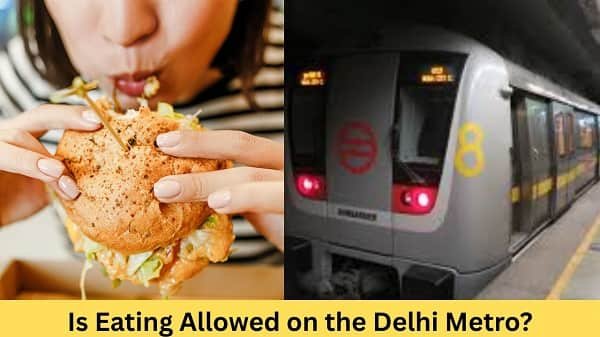
No, eating is not allowed inside Delhi Metro trains or station premises. The rules clearly prohibit passengers from consuming food while traveling.
However, passengers can carry food items in their bags. The restriction applies only to eating, not carrying. Therefore, you can bring food but must consume it outside metro areas. Because metro trains operate in enclosed and crowded environments, maintaining cleanliness and discipline becomes essential. Moreover, passengers often carry snacks or beverages during travel. At the same time, confusion about rules can lead to penalties or warnings. Therefore, understanding the policy helps ensure a smooth journey.
Why Eating Is Not Allowed
1. Cleanliness
Food can create litter such as wrappers, crumbs, and spills. Therefore, banning eating helps maintain cleanliness.
2. Hygiene
Metro coaches carry thousands of passengers daily. As a result, food waste can attract insects or create unhygienic conditions.
3. Comfort of Passengers
Strong food smells may disturb other passengers. Therefore, avoiding eating ensures a pleasant environment.
4. Maintenance Efficiency
Cleaning becomes easier when food consumption is restricted. Consequently, operations remain smooth.
What About Drinking Water?
Drinking water is allowed in the Delhi Metro. Passengers can carry water bottles and drink when needed.
However, spilling water should be avoided. Therefore, passengers should handle bottles carefully.
Can You Carry Food in Metro?
Yes, carrying food is allowed. Many passengers carry packed meals, snacks, or groceries.
However:
- Food must remain sealed
- It should not create odor
- It should not leak
Therefore, carrying food does not violate rules as long as you do not eat it.
What Happens If You Eat Inside Metro?
If a passenger eats inside the metro, authorities may take action.
Possible consequences include:
- Warning from staff
- Fine or penalty
- Being asked to stop immediately
Therefore, following the rules helps avoid inconvenience.
Are There Any Exceptions?
Generally, no exceptions exist for eating inside metro premises. The rule applies equally to all passengers.
However, small children or medical situations may receive leniency in rare cases. Still, such situations depend on staff discretion.
Comparison with Other Metro Systems
Many metro systems worldwide follow similar rules. For example:
- Singapore Metro strictly bans eating
- London Metro discourages it
- Some systems allow limited consumption
Delhi Metro follows a strict approach. Therefore, it prioritizes cleanliness and discipline.
Tips for Passengers
1. Eat Before Entering
Finish your meal before entering the station. Therefore, you avoid any issues.
2. Carry Sealed Food
If you need to carry food, keep it properly packed. As a result, it remains safe.
3. Avoid Messy Items
Do not carry food that can spill easily. Therefore, you prevent inconvenience.
4. Follow Rules
Respect metro guidelines. Consequently, travel remains smooth.
5. Real-Life Experience
Many passengers report that metro staff actively monitor food consumption. If someone starts eating, staff usually intervene quickly.
Moreover, announcements inside trains remind passengers about rules. Therefore, awareness remains high.
Why Rules Are Strict
Metro systems handle large crowds daily. Therefore, even small issues can become major problems.
Moreover:
- Cleanliness affects overall experience
- Discipline ensures smooth operations
- Safety improves when rules are followed
As a result, strict rules benefit everyone.
Where Can You Eat Instead?
1. Outside Metro Stations
Food stalls and restaurants exist near most stations. Therefore, you can eat comfortably.
2. Food Courts
Many stations connect to malls with food courts. As a result, options increase.
3. Street Food Areas
Popular markets near metro stations offer quick snacks. Therefore, variety remains high.
Benefits of This Rule
1. Cleaner Environment
Metro coaches remain clean and fresh.
2. Better Experience
Passengers enjoy a comfortable journey.
3. Faster Cleaning
Maintenance staff can work efficiently.
4. Reduced Complaints
Fewer issues arise among passengers.
Challenges Faced by Passengers
1. Long Travel Time
Some travel take longer, making it difficult to wait.
2. Hunger During Travel
Passengers may feel hungry during peak hours.
3. Limited Awareness
New passengers may not know the rules.
4. Future Possibilities
Although the rule remains strict, future changes may introduce designated eating zones in stations. However, trains will likely remain food-free.
Moreover, improved station facilities may offer better dining options. Therefore, convenience may increase without changing core rules.
Why This Topic Matters
Understanding metro rules helps passengers avoid fines and inconvenience. Moreover, it promotes responsible behavior.
In addition, clean public transport improves city life. Therefore, awareness benefits everyone.
Conclusion
Eating is not allowed on the Delhi Metro, and the rule applies to both trains and station areas. However, passengers can carry food and consume it outside metro premises. Therefore, planning meals before or after travel becomes important.
Moreover, the rule ensures cleanliness, comfort, and safety for all passengers. In conclusion, following metro guidelines helps create a better travel experience for everyone.
FAQs
Q1. Is eating allowed in Delhi Metro?
A: No, eating is not allowed inside trains or stations.
Q2. Can I carry food in metro?
A: Yes, you can carry food but not eat it.
Q3. Is drinking water allowed?
A: Yes, drinking water is allowed.
Q4. What happens if I eat inside?
A: You may receive a warning or fine.
Q5. Are there any exceptions?
A: Generally no, but rare cases may occur.
Q6. Why is eating banned?
A: To maintain cleanliness and hygiene.
Q7. Can I eat on platforms?
A: No, eating is not allowed on platforms either.
Q8. Where can I eat instead?
A: You can eat outside metro stations or nearby food outlets.