When people imagine a dangerous animal, lions, sharks or crocodiles often come to mind. In reality, the creatures responsible for the greatest number of human deaths are usually much smaller. Mosquitoes, disease-carrying insects, venomous snakes and even parasitic worms kill far more people than most large predators.
This ranking is based on estimated annual human deaths rather than physical strength, aggression or venom potency. Global numbers are not exact because many deaths occur in regions with limited reporting, but recent public-health research provides a useful picture of the relative scale of the danger.
So, let’s check out the Top 10 Most Dangerous Animals in the World and see why some of the smallest creatures on Earth are responsible for the largest human death tolls.
1. Mosquitoes – Around 760,000 Deaths per Year
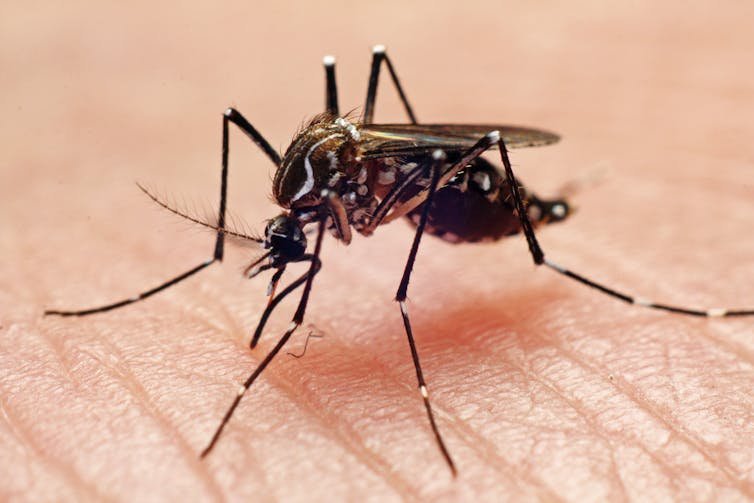
The mosquito is by far the deadliest animal to humans, but not because of the bite itself. Female mosquitoes of several species transmit diseases including malaria, dengue, yellow fever, Japanese encephalitis and chikungunya.
A 2026 comparative estimate by Our World in Data places mosquito-related deaths at about 760,000 per year. Malaria accounts for most of the toll. The World Health Organization estimated 610,000 malaria deaths in 2024 alone, with the overwhelming majority occurring in Africa and a particularly heavy burden among children under five.
Mosquitoes are so dangerous because billions of people live in areas where disease-carrying species can breed. Their small size, rapid reproduction and ability to live close to humans make exposure far more common than encounters with large predators.
2. Snakes – Around 100,000 Deaths per Year
Venomous snakes are the second-largest animal-related killer in current global comparisons. WHO estimates that about 4.5 to 5.4 million people are bitten by snakes each year, with 81,000 to 138,000 dying from complications.
Different venoms affect the body in different ways. Some can cause paralysis and respiratory failure, while others trigger severe bleeding, kidney damage, tissue destruction or shock. Species responsible for large numbers of serious bites include saw-scaled vipers, cobras, kraits and Russell’s vipers.
The greatest burden falls on rural farming communities in Africa, Asia and Latin America. Many deaths could be prevented with rapid treatment and effective antivenom, but victims may live hours away from a hospital or may not have access to the correct antivenom.
3. Dogs – Around 40,000 Deaths per Year
Dogs are closely associated with human life, yet they rank surprisingly high because of rabies. The vast majority of these deaths are not caused directly by bite injuries but by infection with the rabies virus.
Recent comparative estimates place dog-related deaths at around 40,000 per year, although WHO continues to cite a broader global estimate of about 59,000 human rabies deaths annually. Up to 99% of human rabies transmission is linked to dogs.
Rabies is almost always fatal once clinical symptoms appear, but it is preventable. Vaccinating dogs and giving people prompt post-exposure treatment after a suspicious bite can stop the disease. Most deaths occur in parts of Africa and Asia where access to vaccination and treatment remains uneven.
4. Freshwater Snails – Around 14,000 Deaths per Year
A harmless-looking freshwater snail can play a crucial role in transmitting schistosomiasis, a parasitic disease affecting communities in tropical and subtropical regions.
The snails act as intermediate hosts for Schistosoma parasites. Larval forms are released into freshwater and can penetrate human skin when people swim, wash, fish or work in contaminated water. Long-term infection may damage the liver, intestines, bladder and other organs.
Current estimates put global deaths from schistosomiasis at roughly 14,000 per year, although WHO warns that the real number may be higher because complications are often recorded under other causes. The danger therefore comes from the parasite life cycle the snail supports rather than from the snail attacking a person.
5. Kissing Bugs – Around 8,000 Deaths per Year
Kissing bugs, also known as triatomine bugs, are blood-feeding insects found mainly in Latin America. They can transmit Trypanosoma cruzi, the parasite responsible for Chagas disease.
Transmission usually occurs when infected bug faeces contaminate a bite wound, the eyes or another break in the skin. Chagas disease may initially cause few symptoms, but years later it can produce serious heart disease, digestive complications and sudden death.
A recent global estimate places the death toll associated with Chagas disease at around 8,000 per year, while WHO has cited figures of roughly 10,000 to 12,000 in different assessments. Millions of people are believed to be infected, making this small insect a major long-term public-health threat.
6. Sandflies – Around 5,000 Deaths per Year
Tiny sandflies can transmit Leishmania parasites, which cause a group of diseases known as leishmaniasis. The most dangerous form is visceral leishmaniasis, also called kala-azar.
Visceral disease attacks internal organs such as the spleen, liver and bone marrow. Without treatment it can be fatal in the great majority of symptomatic cases. The disease is concentrated in some of the world’s poorest communities, where malnutrition, weak housing and limited healthcare increase vulnerability.
Recent global burden estimates suggest around 5,000 deaths per year, although the number remains uncertain because cases are often missed. The sandfly’s tiny size and quiet feeding behaviour make it easy for people to be bitten without noticing.
7. Ascaris Roundworms – Around 4,000 Deaths per Year
Ascaris lumbricoides is a parasitic roundworm that infects the human intestine. Infection usually occurs when people accidentally swallow microscopic eggs from contaminated soil, food, water or hands.
Many infections are mild, but a heavy worm burden can cause intestinal blockage, nutritional problems and complications involving the liver or pancreas. Children living in areas with poor sanitation are particularly vulnerable.
Current estimates place deaths associated with ascariasis at around 4,000 per year, although the true number is difficult to determine because fatal complications may be attributed to obstruction, infection or other immediate causes rather than to the parasite itself.
8. Scorpions – Around 3,000 Deaths per Year
Scorpions are among the most dangerous venomous arthropods. More than 2,500 species are known, but only a relatively small number possess venom capable of causing severe or fatal illness in humans.
Dangerous stings can affect the nervous and cardiovascular systems, causing intense pain, breathing difficulties, abnormal heart rhythms, shock and other complications. Children are at greater risk because the same dose of venom has a stronger effect on a smaller body.
Global estimates commonly place the death toll at around 3,000 per year. Fatal stings occur mainly in parts of Africa, the Middle East, Latin America and South Asia, where dangerous species overlap with large rural populations and rapid access to antivenom may be limited.
9. Tapeworms – Around 2,000 Deaths per Year
Tapeworms seem unlikely candidates for a list of dangerous animals, but Taenia solium can cause a serious condition called cysticercosis. When larval cysts develop in the brain, the condition is known as neurocysticercosis.
Neurocysticercosis is a major preventable cause of epilepsy in many low-income regions. It can lead to seizures, increased pressure inside the skull, neurological damage and, in severe cases, death.
Recent comparative estimates use roughly 2,000 deaths per year, but this figure is especially uncertain. Some health estimates are much higher because they include deaths linked indirectly to neurological complications. Improved sanitation, safe food preparation and treatment of tapeworm carriers can greatly reduce transmission.
10. Tsetse Flies – Around 1,500 Deaths per Year
Tsetse flies are found in sub-Saharan Africa and transmit the parasites that cause human African trypanosomiasis, better known as sleeping sickness.
The disease can progress from fever, headaches and joint pain to serious neurological symptoms after the parasite reaches the central nervous system. Without treatment, many forms of the disease can eventually be fatal.
Recent estimates place the annual death toll at around 1,500, dramatically lower than it was at the beginning of this century. Intensive surveillance, screening and treatment programmes have reduced cases enormously, but the tsetse fly remains one of the world’s most medically important disease vectors.
What Makes an Animal Truly Dangerous?
The number of people an animal kills depends on far more than its physical power. Exposure is crucial. Most people will never come close to a wild lion, but billions live alongside mosquitoes, dogs, snakes, parasites and disease-carrying insects.
Disease transmission also changes the meaning of danger. Mosquitoes and kissing bugs do not usually kill through the physical injury of a bite. They act as vectors that allow parasites or viruses to move between hosts. Freshwater snails are even more indirect: they support part of the life cycle of the parasite that causes schistosomiasis.
This is why familiar predators rank surprisingly low by annual deaths. Crocodiles, big cats, sharks and bears can be extremely dangerous during an encounter, but humans encounter them far less frequently. On a global scale, tiny disease vectors and parasites create a much larger public-health burden.
Final Word
The world’s most dangerous animals are not necessarily the ones with the biggest teeth or strongest jaws. Mosquitoes dominate because they spread several deadly diseases, while snakes and rabies-transmitting dogs account for tens of thousands of deaths each year. Even snails, flies and microscopic-parasite hosts can have a greater human impact than famous predators.
The encouraging part is that many of these deaths are preventable. Mosquito control, vaccination, sanitation, antivenom, rapid medical treatment and better access to healthcare can reduce the toll dramatically. Understanding which animals actually cause the most deaths helps put the risks in perspective.