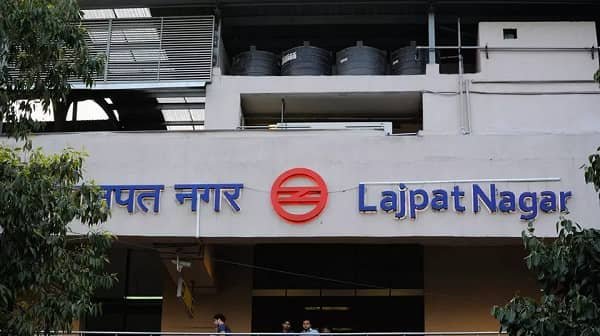
Lajpat Nagar Metro Station is one of the most important metro stations in South Delhi. It serves as a major interchange station on the Delhi Metro network and is widely used by daily commuters, shoppers, and tourists. Located near the famous Lajpat Nagar market, the station experiences heavy footfall throughout the day.
The station plays a crucial role in connecting different parts of Delhi through the Violet Line and Pink Line. Its strategic location, combined with strong connectivity and access to commercial areas, makes it one of the busiest metro stations in the city.
Lajpat Nagar Metro Station Quick Overview
| Feature | Details |
| Station Name | Lajpat Nagar Metro Station |
| Location | Lajpat Nagar, South Delhi |
| Opened | 2010 (Violet Line), 2018 (Pink Line) |
| Metro Lines | Violet Line & Pink Line |
| Station Type | Underground |
| Platforms | 4 |
| Entry/Exit Gates | Multiple gates |
| Owned By | Delhi Metro Rail Corporation (DMRC) |
| Nearby Landmark | Lajpat Nagar Market |
| First Train | Around 6:00 AM |
| Last Train | Around 11:00 PM |
History and Development
Lajpat Nagar Metro Station was initially opened in 2010 as part of the Violet Line, which connects Central Secretariat to Badarpur and further to Ballabhgarh. This development significantly improved connectivity in South Delhi.
In 2018, the station became an interchange hub with the introduction of the Pink Line. This addition enhanced its importance by allowing passengers to travel across ring routes in Delhi without passing through central congestion points.
Over time, the station has become a key transit point due to its location and interchange functionality.
Location and Importance
The station is located in the bustling area of Lajpat Nagar, one of Delhi’s most popular shopping and residential zones. The nearby Lajpat Nagar Market is a major attraction, known for clothing, accessories, and street food.
Its location makes it easily accessible for residents of South Delhi and nearby areas such as Defence Colony, South Extension, and Ashram. The station also acts as a gateway for people visiting commercial hubs and local markets.
Metro Lines and Connectivity
Violet Line (Kashmere Gate – Raja Nahar Singh/Ballabhgarh)
The Violet Line connects North Delhi to Faridabad and Ballabhgarh. From Lajpat Nagar, passengers can travel to important locations such as:
- Central Secretariat
- Mandi House
- Kalkaji Mandir
- Faridabad
This line is widely used by daily commuters and office workers.
Pink Line (Majlis Park – Shiv Vihar)
The Pink Line is a ring corridor that connects many parts of Delhi without passing through central hubs. Key destinations include:
- South Extension
- INA
- Rajouri Garden
- Anand Vihar
The Pink Line improves connectivity and reduces travel time for passengers.
Lajpat Nagar serves as a major interchange between these two lines, making travel more convenient.
Station Layout and Structure
Lajpat Nagar Metro Station is an underground station designed to handle high passenger traffic. It consists of multiple levels:
- Street Level: Entry and exit gates connecting to nearby roads and markets
- Concourse Level: Ticket counters, security checks, and smart card recharge facilities
- Platform Level: Separate platforms for Violet Line and Pink Line
The station has four platforms in total and is equipped with escalators, elevators, and clear signage.
Facilities Available
The station offers a variety of facilities for passenger convenience:
- Smart card recharge and token counters
- Escalators and elevators
- CCTV surveillance and security personnel
- Clean premises and waiting areas
- Shops and kiosks
- Parking facilities nearby
These facilities help manage the large number of commuters efficiently.
Nearby Attractions and Places
Lajpat Nagar Metro Station is surrounded by several important locations:
- Lajpat Nagar Market
- Central Market (shopping hub)
- South Extension Market
- Defence Colony
- Amar Colony
The station is especially popular among shoppers and tourists looking for affordable fashion and local food.
Connectivity with Other Transport
Bus Services
The station is well-connected with DTC buses and private buses, providing access to different parts of Delhi.
Auto-Rickshaws and E-Rickshaws
Autos and e-rickshaws are easily available outside the station for short-distance travel.
Cab Services
App-based cab services like Ola and Uber are widely available in this area.
This strong connectivity ensures smooth last-mile travel.
Why Lajpat Nagar Metro Station is Important
There are several reasons why this station is significant:
- Interchange between Violet Line and Pink Line
- Located near a major shopping destination
- High daily passenger footfall
- Strong connectivity across Delhi
These factors make it one of the busiest metro stations in South Delhi.
Tips for Commuters
- Avoid peak hours and weekends for a better experience
- Use smart cards for faster travel
- Follow signage for easy interchange
- Keep belongings safe in crowded areas
Conclusion
Lajpat Nagar Metro Station is a key part of the Delhi Metro network and an essential transit hub in South Delhi. Its role as an interchange station, combined with its proximity to popular markets and residential areas, makes it highly important for commuters. Whether you are traveling for work, shopping, or leisure, the station offers a convenient and efficient mode of transportation.
FAQs
Q1. Why is Lajpat Nagar Metro Station important?
Ans: It is an interchange station connecting the Violet Line and Pink Line.
Q2.Which metro lines pass through this station?
Ans: The Violet Line and Pink Line.
Q3. Is Lajpat Nagar Metro Station underground?
Ans: Yes, it is an underground station.
Q4. What are the timings of the station?
Ans: The station operates from around 6:00 AM to 11:00 PM.
Q5. Are parking facilities available?
Ans: Yes, parking is available nearby.
Q6. What are the nearby attractions?
Ans: Lajpat Nagar Market and Central Market are major attractions.
Q7. Is it crowded?
Ans: Yes, especially during weekends and festive seasons.
Q8. Is it suitable for daily commuters?
Ans: Yes, it is widely used by office workers and regular travelers.