Education has played a major role in shaping India’s social and economic progress, but the level of educational development still varies widely from one state to another. Some states have achieved near-universal literacy through decades of investment in schools, community participation, adult education and better access even in remote areas.
There is no single official government ranking called the ‘most educated states’. To keep the comparison clear, this list uses the latest comparable literacy rates for people aged seven years and above from the Periodic Labour Force Survey (PLFS) 2023-24. Union Territories have been excluded because the title refers specifically to states.
So, let’s check out the Top 10 Most Educated States in India and see which states lead the country in literacy and what has helped them build stronger education systems.
1. Mizoram – Literacy Rate: 98.2%
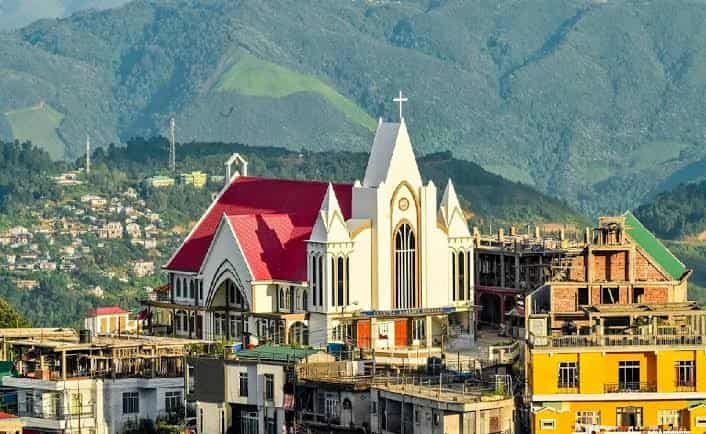
Mizoram ranks first among Indian states with a literacy rate of 98.2% for people aged seven years and above. The figure places it well above the national average of 80.9%.
Education has long held a strong social position in Mizoram. Schools are spread across towns and rural settlements, while community organisations and local institutions have historically supported reading, schooling and adult learning. The state’s relatively small population also makes it easier to reach remote communities through targeted programmes.
In May 2025, Mizoram was officially declared India’s first state to achieve full literacy under the Ministry of Education’s benchmark, which treats literacy above 95% as full literacy. Its achievement reflects not only school participation but also adult-literacy campaigns aimed at people who missed formal education earlier in life.
2. Nagaland – Literacy Rate: 95.7%
Nagaland is the second most literate state in India in the latest states-only ranking, with a literacy rate of 95.7%.
The state has made remarkable progress over several decades. At the time of statehood in 1963, literacy was much lower, but the expansion of schools, church-supported education, community participation and increasing demand for formal learning transformed the educational landscape.
Nagaland’s strength is especially notable because much of its population is spread across hilly terrain and relatively small settlements. Maintaining access to schooling in such geography is difficult, yet the state has reached a literacy level that now places it among India’s strongest performers.
3. Kerala – Literacy Rate: 95.3%
Kerala has long been associated with high literacy and strong social development. Its current literacy rate of 95.3% keeps it among India’s top three states.
The roots of Kerala’s performance go back many decades. Social reform movements, missionary and community schools, government investment, high female participation in education and widespread public demand for schooling all contributed to the state’s success.
Kerala also developed one of India’s earliest large-scale adult literacy movements. Even though Mizoram and Nagaland now record slightly higher PLFS literacy rates, Kerala remains a national reference point because its educational achievements extend across both rural and urban areas and are supported by strong health and social-development indicators.
4. Meghalaya – Literacy Rate: 94.2%
Meghalaya ranks fourth among Indian states with a literacy rate of 94.2%. Its position is particularly impressive given the state’s mountainous geography and large rural and tribal population.
Education in Meghalaya is supported by a broad network of government, private, missionary and community-run institutions. Shillong has also developed into an important educational centre for the Northeast, attracting students from within the state and neighbouring regions.
The state’s high literacy reflects strong social acceptance of formal education and relatively small gender differences compared with many parts of India. Challenges remain in remote areas, especially in school infrastructure and learning outcomes, but Meghalaya’s overall literacy performance is among the best in the country.
5. Tripura – Literacy Rate: 93.7%
Tripura records a literacy rate of 93.7%, placing it fifth among Indian states in the PLFS 2023-24 ranking.
The state has steadily expanded access to primary and secondary education across both urban and rural areas. Government literacy drives, community participation and programmes aimed at disadvantaged groups have helped bring more people into formal and adult education.
Tripura’s progress is important because it shows that high literacy is not limited to India’s wealthiest states. Despite a relatively modest economy and a large rural population, the state has built a strong literacy base and has continued to focus on school access, teacher availability and adult learning.
6. Goa – Literacy Rate: 93.6%
Goa follows closely behind Tripura with a literacy rate of 93.6%. Its compact geography, high urbanisation and relatively strong social indicators have supported broad access to education.
The state has a dense network of schools and colleges, and educational participation is generally high among both men and women. Goa also benefits from good road connectivity and easier physical access to institutions compared with many larger and more mountainous states.
Adult-literacy efforts have added to the progress made through formal schooling. Goa’s high literacy level places it comfortably above most Indian states and close to the threshold used by the Ministry of Education for full-literacy status.
7. Manipur – Literacy Rate: 92.0%
Manipur has a literacy rate of 92.0%, making it the seventh most literate state in India when Union Territories are excluded.
The state has a long tradition of educational participation, particularly in the Imphal Valley, which contains many of Manipur’s major schools, colleges and universities. Community organisations have also played an important role in promoting learning.
Geography creates a challenge because many hill districts contain dispersed settlements that are harder to serve. Even with these difficulties, Manipur’s literacy level is substantially above the national average, showing the strong cultural value attached to education across the state.
8. Himachal Pradesh – Literacy Rate: 88.8%
Himachal Pradesh is the highest-ranked state outside the Northeast, Kerala and Goa in this list, with a literacy rate of 88.8%.
Its achievement is notable because much of the state is mountainous and many communities are spread across difficult terrain. Over the years, the government expanded schools into rural and remote areas, reducing the distance children had to travel to receive basic education.
Himachal Pradesh has also performed strongly in school participation and gender inclusion. The state’s experience shows how sustained investment in public schooling can overcome geographical barriers and create relatively broad educational access even in scattered mountain communities.
9. Maharashtra – Literacy Rate: 87.3%
Maharashtra ranks ninth with a literacy rate of 87.3%. As one of India’s most populous and economically important states, it has a far larger and more diverse education system than most states above it in the ranking.
Mumbai, Pune, Nagpur and other major cities contain some of the country’s best-known universities, colleges and professional institutions. Maharashtra is also a major centre for engineering, medicine, management, research and technical education.
The challenge is unevenness. Urban areas generally have much stronger educational access than some rural and tribal districts. Even so, the state’s overall literacy remains well above the national average, supported by a large school network and a deep higher-education ecosystem.
10. Assam – Literacy Rate: 87.0%
Assam completes the Top 10 with a literacy rate of 87.0%.
As the largest state in the Northeast by population, Assam faces educational challenges that differ from those of smaller neighbouring states. River islands, flood-prone areas, tea-garden communities and remote rural districts can make regular access to schools more difficult.
Despite these barriers, Assam has expanded its network of schools, colleges and universities and serves as a major educational hub for the wider Northeast. Institutions in Guwahati and other cities attract students from across the region. Its literacy rate of 87.0% places it more than six percentage points above the national average.
What Makes a State Highly Educated?
Literacy is the clearest nationally comparable starting point, but education is broader than the ability to read and write. School enrolment, learning outcomes, years of schooling, access to colleges, female education, teacher quality and adult learning all influence how educationally developed a state becomes.
The highest-ranked states often share several advantages: strong social demand for schooling, easier access to local schools, community involvement and sustained public investment. Smaller states can also benefit from having fewer people to reach, although difficult geography can offset that advantage.
India’s national literacy rate for people aged seven and above is 80.9%, so every state in this Top 10 performs clearly above the national level. At the same time, literacy alone should not be treated as a complete measure of educational quality, because a state can have high literacy while still facing challenges in learning outcomes or higher-education access.
Final Word
The latest literacy data shows a strong performance by India’s smaller and northeastern states. Mizoram leads with 98.2%, followed by Nagaland and Kerala, while Meghalaya, Tripura, Goa and Manipur also remain above 90%. Himachal Pradesh, Maharashtra and Assam complete the states-only Top 10.
The rankings also show that educational progress is possible under very different conditions. Kerala built its position through decades of social reform and public investment, Mizoram and Nagaland through strong community participation, and Himachal Pradesh by expanding schooling across difficult mountain terrain. Together, these states demonstrate how sustained access to education can transform literacy across generations.