India is filled with forts, abandoned villages, colonial mansions, forests and old monuments carrying stories that have survived for generations. Some are linked to real murders, battles or deserted settlements, while others grew from local folklore, unexplained sounds and stories passed from one visitor to another.
There is no scientific or official ranking of haunted places, and paranormal claims at these locations have not been proven. The list below therefore ranks them by the strength of their haunted reputation, the history behind the stories and how deeply the legends have become connected with the place.
So, let’s check out the Top 10 Most Haunted Places in India and discover the history, legends and eerie stories that have made these locations famous.
1. Bhangarh Fort, Rajasthan
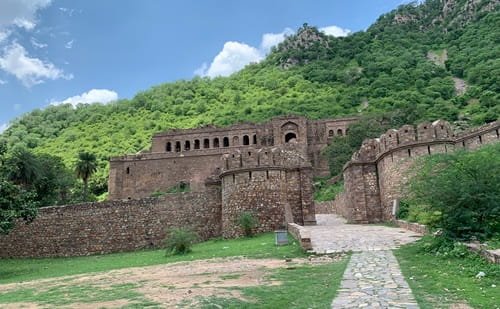
Bhangarh Fort in Rajasthan’s Alwar district is probably the best-known haunted location in India. Built in the 17th century by Raja Madho Singh, the ruined fort complex contains old temples, marketplaces, havelis and the remains of a royal palace surrounded by the Aravalli hills.
Two legends dominate its reputation. One tells of a holy man who warned that no building should cast a shadow over his dwelling. Another centres on Princess Ratnavati and a sorcerer who supposedly cursed Bhangarh after his attempt to use magic against her failed. The stories are folklore rather than verified history, but they have become inseparable from the fort.
Its abandoned streets and ruined buildings create an eerie atmosphere even in daylight. Visitors are not permitted inside before sunrise or after sunset, a restriction that has only strengthened Bhangarh’s status as India’s most famous haunted fort.
2. Kuldhara, Rajasthan
About 17 kilometres from Jaisalmer lies Kuldhara, an abandoned settlement once inhabited by prosperous Paliwal Brahmins. Rajasthan Tourism records that the village was established in 1291 and was deserted in the early 19th century.
The most famous legend says a powerful minister named Salim Singh wanted to marry the village chief’s daughter and threatened the community when his demand was resisted. According to the story, the residents of Kuldhara and nearby villages left their homes overnight and cursed the settlement so that nobody could permanently live there again.
Historians have proposed practical explanations for the abandonment, including water shortage and economic pressure, but the curse story remains far more famous. Rows of roofless sandstone houses, silent lanes and an empty temple have turned Kuldhara into one of India’s best-known ghost towns.
3. Dow Hill, Kurseong, West Bengal
Dow Hill in Kurseong is different from most haunted places because the stories are spread across a forest, a road and old colonial-era school buildings rather than one single monument. Dense trees, heavy mist and quiet mountain roads give the area an naturally unsettling atmosphere.
The best-known legend speaks of a headless boy seen walking along a forest road sometimes called the Death Road. Other stories describe unexplained footsteps and voices around Victoria Boys’ School during periods when the school is closed, as well as apparitions moving between the trees.
None of these accounts has been scientifically verified, and mist, shadows, wildlife and forest acoustics can offer ordinary explanations for some experiences. Even so, the consistency of Dow Hill’s folklore has made Kurseong one of the most frequently cited haunted destinations in eastern India.
4. Shaniwar Wada, Pune, Maharashtra
Shaniwar Wada was once the political centre of the Peshwas and one of Pune’s grandest buildings. Constructed in the 18th century, much of the palace was destroyed by a major fire in 1828, leaving the massive gates, fortification walls and foundations seen today.
Its haunted reputation is associated with the murder of the young Peshwa Narayanrao in 1773. Historical accounts confirm that Narayanrao was killed inside the complex during a political conspiracy. Folklore later developed around the tragedy, claiming that cries for help can still be heard around the fort, particularly on certain nights.
The murder is real history; the supernatural part is legend. That combination of political intrigue, violent death and ruined architecture has made Shaniwar Wada one of India’s most enduring haunted-place stories.
5. Agrasen ki Baoli, Delhi
Hidden among modern buildings near Connaught Place, Agrasen ki Baoli is an ancient stepwell about 60 metres long and 15 metres wide, with more than 100 steps descending between rows of arched chambers.
Its exact origins are uncertain, although the surviving structure is generally associated with medieval Delhi. The haunting legend claims that the baoli once contained dark water capable of drawing people toward it. Some versions say visitors felt strangely compelled to descend deeper into the stepwell.
Today the water has dried up, and Incredible India specifically notes that there is no concrete evidence supporting paranormal claims. Yet the deep staircase, dark arches, sudden drop in temperature and strong echoes have kept the legend alive, making Agrasen ki Baoli one of Delhi’s most atmospheric heritage sites.
6. Dumas Beach, Surat, Gujarat
Dumas Beach near Surat is famous for its dark sand and for stories that change dramatically after sunset. During the day it is an ordinary seaside destination filled with visitors, food stalls and families enjoying the Arabian Sea.
The beach’s haunted reputation is linked to its historical use as a cremation site. Local folklore speaks of whispers, strange sounds and shadowy figures after dark, while sensational versions of the story claim that people have disappeared from the shoreline.
There is no evidence proving a supernatural cause. Local residents interviewed about the beach have even dismissed many of the ghost stories, while the black colour of the sand is better explained by its mineral content than cremation ash. Still, the contrast between a busy daytime beach and its darker folklore has made Dumas one of India’s most famous haunted coastal locations.
7. Mukesh Mills, Mumbai, Maharashtra
Mukesh Mills in Mumbai is a ruined former textile mill near the sea in Colaba. After the industrial complex fell into disrepair following a major fire, its burnt walls, broken windows and abandoned structures became a popular location for film and television shoots.
Most of the ghost stories come from people connected with the entertainment industry. Over the years, crew members have described unexplained footsteps, moving shadows, equipment problems and a feeling of being watched. Stories involving actors and alleged possession have also circulated widely.
These claims remain unverified, and the site’s physical condition offers a more immediate danger than anything paranormal. The compound has been closed because parts of the structures became unsafe. Its burnt industrial architecture and decades of film-industry folklore nevertheless keep Mukesh Mills high on India’s haunted-place lists.
8. Brij Raj Bhavan Palace, Kota, Rajasthan
Brij Raj Bhavan in Kota was built in the 19th century as a residence for the British Political Agent and later became a state guest house and heritage property. Its haunted story is tied to a violent and well-documented episode during the uprising of 1857.
Major Charles Burton and his two sons were killed at the British Residency in October 1857 when rebel forces attacked the building. The historical event is recorded by India’s Ministry of Culture and provides a real background to the later ghost legend.
According to local folklore, the spirit of Major Burton still moves through the property. Some versions describe footsteps at night, while another popular story says inattentive guards have felt an unseen slap or heard a voice ordering them to stay awake. The supernatural claims are legend, but the tragic history behind them is genuine.
9. Ramoji Film City, Hyderabad, Telangana
Ramoji Film City is one of India’s largest film-production complexes, filled with sound stages, outdoor sets, hotels and attractions. That makes its presence on a haunted list unusual: unlike a ruined fort or abandoned village, it is a busy working entertainment destination.
Its ghost stories are largely connected with film crews. Over the years, reports have circulated about unexplained noises, falling equipment, strange figures and unusual incidents in dressing rooms or on sets. A popular urban legend says the complex was built on land associated with an old battlefield and that the spirits of soldiers remain there.
The management has not confirmed paranormal activity, and there is no established historical proof connecting the site to the dramatic battlefield story in the way the legend describes. Even so, repeated retelling within the film industry has made Ramoji Film City one of India’s best-known modern haunted locations.
10. Morgan House, Kalimpong, West Bengal
Morgan House is a stone-built colonial mansion in Kalimpong dating from the 1930s. Built for George Morgan and his family, the property later passed into government hands and today operates as a tourism lodge surrounded by the green hills of Durpin Dara.
The most familiar legend says the spirit of Lady Morgan still walks through the old house. Guests and storytellers have described the sound of high heels on wooden corridors and unexplained footsteps when no one appears to be nearby.
There is no verified evidence of a haunting, and wooden floors, old plumbing and changing mountain weather can easily create unusual sounds. Even so, Morgan House remains one of India’s rare haunted locations where visitors can actually stay, giving its ghost story a very different character from abandoned forts and ruins.
Why Are These Places Considered Haunted?
Most haunted-place legends grow from a mixture of real history and atmosphere. Abandoned settlements, violent deaths, fires, wars and old buildings create strong stories, while darkness, echoes, mist, animals and unfamiliar surroundings can make ordinary sights and sounds feel unusual.
Folklore also becomes stronger through repetition. A story told by local residents may be repeated in newspapers, films, travel programmes and social media until it becomes part of a site’s public identity. Bhangarh, Kuldhara and Shaniwar Wada are good examples of places where legend now sits alongside documented history.
Visitors should also separate curiosity from risk. Restrictions at heritage sites, unsafe abandoned buildings, railway property and isolated beaches should be respected regardless of whether anyone believes in ghosts. The most interesting way to explore these locations is through their history, architecture and folklore rather than trespassing or attempting dangerous night visits.
Final Word
India’s most haunted places are fascinating because their stories sit somewhere between history, memory and folklore. Bhangarh and Kuldhara turn abandoned Rajasthan settlements into legends of curses, Shaniwar Wada connects ghost stories with a real political murder, while places such as Dow Hill and Dumas Beach rely more heavily on atmosphere and generations of local storytelling.
Whether the paranormal stories are believed or not, these locations have become part of India’s popular cultural landscape. Their real ruins, historical events and unusual settings are often compelling enough even without proving that anything supernatural is there.