A great airport can completely change the experience of international travel. Fast immigration, clean terminals, comfortable seating, efficient baggage handling and good dining can turn a long journey into something far less stressful. The very best airports go even further, offering gardens, entertainment, shopping, premium lounges and carefully designed spaces that feel more like destinations than transport hubs.
Asian airports continue to dominate the world’s highest positions, with Singapore, South Korea, Japan and Hong Kong occupying the first five places. European airports also perform strongly, while Vancouver is the only North American airport to enter the global top ten in 2026.
The ranking follows the 2026 Skytrax World Airport Awards, based on passenger experiences covering areas such as check-in, arrivals, transfers, terminal comfort, cleanliness, shopping, dining, security, immigration and departure facilities.
Let’s check out the top 10 list of the best airports in the world.
1. Singapore Changi Airport, Singapore
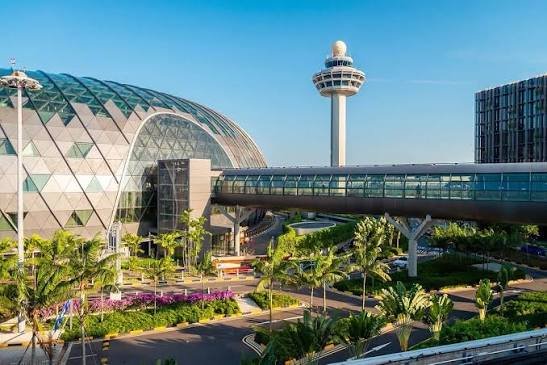
Singapore Changi Airport is ranked the best airport in the world in 2026, once again establishing itself as the global benchmark for passenger experience.
Changi has transformed the traditional idea of an airport. Its terminals combine efficient aviation services with gardens, entertainment areas, restaurants, shopping and comfortable spaces designed for passengers spending several hours between flights.
One of its most famous attractions is Jewel Changi Airport, connected directly with the airport terminals. Jewel features the spectacular HSBC Rain Vortex, an indoor waterfall surrounded by greenery, restaurants, shops and recreational attractions.
Efficiency remains just as important as entertainment. Automated immigration facilities, clear signage, well-organised transfers and high standards of cleanliness allow Changi to handle large passenger volumes without losing the sense of comfort for which it is famous.
2. Incheon International Airport, South Korea
Incheon International Airport, serving Seoul and the surrounding region, takes second place in the 2026 ranking.
Located west of Seoul, Incheon is South Korea’s principal international gateway and one of Asia’s most important aviation hubs. Its large terminals were designed to handle international transfers efficiently while still providing passengers with extensive facilities.
Travellers can find lounges, shopping areas, restaurants, cultural spaces and family facilities throughout the airport. Korean cultural exhibitions and performances also give international visitors an introduction to the country before they even leave the terminal.
Incheon combines modern architecture with advanced technology and strong passenger services, making it particularly attractive for long-distance travellers connecting between Asia, North America and other regions.
3. Tokyo Haneda Airport, Japan
Tokyo Haneda Airport ranks third in the world and remains one of the most impressive examples of an extremely busy airport operating with remarkable efficiency.
Haneda is located much closer to central Tokyo than Narita, making it particularly convenient for passengers travelling to and from the Japanese capital. It handles a huge number of domestic services as well as a growing international network.
Cleanliness is one of Haneda’s greatest strengths. Terminals, washrooms, seating areas and public spaces are maintained to exceptionally high standards, while Japanese service culture is reflected throughout the passenger experience.
Fast transportation links into Tokyo, efficient security processes and well-organised terminals help make Haneda especially attractive to business travellers and passengers with limited connection times.
4. Hong Kong International Airport, Hong Kong
Hong Kong International Airport rises to fourth position in the 2026 global ranking.
Built on the island of Chek Lap Kok, the airport has been one of Asia’s most important international aviation hubs since opening in 1998. Its location gives airlines convenient connections between mainland China, Southeast Asia, Europe, North America and other regions.
Hong Kong International Airport offers extensive shopping and dining choices along with comfortable lounges and well-developed passenger facilities.
Its efficient transport connections are another major advantage. The Airport Express provides a fast rail link between the airport and central Hong Kong, making transfers between the terminal and the city straightforward.
Continued expansion and terminal improvements are helping the airport strengthen its role as one of the world’s major international gateways.
5. Tokyo Narita Airport, Japan
Japan earns a second place in the global top five through Narita International Airport, which ranks fifth in 2026.
Narita is an important international gateway for the Greater Tokyo region and handles a large number of long-distance flights connecting Japan with Europe, North America, Asia and other markets.
Passenger service is one of Narita’s strongest qualities. Staff are widely recognised for their professionalism, efficiency and polite approach, helping travellers navigate what can be a large and busy international airport.
The terminals provide Japanese restaurants, international dining, duty-free shopping, lounges and convenient facilities for passengers with longer connections.
While Narita is farther from central Tokyo than Haneda, extensive rail and bus services provide dependable links with the city.
6. Paris Charles de Gaulle Airport, France
Paris Charles de Gaulle Airport ranks sixth and is the highest-ranked French airport in the world.
Commonly known as Paris CDG, it is one of Europe’s largest aviation hubs and a major connecting point for Air France and its international partners.
The airport serves an enormous global network, making it particularly important for travellers connecting between Europe, Africa, Asia and the Americas.
Charles de Gaulle has undergone major terminal renovations and improvements over the years, with modernised lounges, retail spaces, restaurants and passenger facilities helping improve the travel experience.
Its size can make connections more complex than at smaller airports, but efficient transportation between terminals and extensive international connectivity keep CDG among the world’s leading aviation hubs.
7. Rome Fiumicino Airport, Italy
Rome Fiumicino Airport, officially Leonardo da Vinci International Airport, takes seventh place in the 2026 ranking.
The airport has undergone a major transformation in recent years, with extensive terminal modernisation improving everything from passenger flow to dining and retail facilities.
Fiumicino is Italy’s largest international airport and the principal gateway for travellers visiting Rome and much of central Italy.
Italian food plays an important role in the passenger experience. Restaurants and cafés offer everything from espresso and pastries to pizza, pasta and more elaborate meals.
Modern facilities, improved security processing, attractive terminals and strong service standards have helped Fiumicino establish itself among Europe’s best-performing major airports.
8. Istanbul Airport, Türkiye
Istanbul Airport jumps into eighth position globally in 2026 and is one of the largest and most ambitious airport developments of the modern era.
The airport replaced Istanbul Atatürk Airport as the city’s main international gateway and was designed to develop Istanbul into one of the world’s largest connecting hubs.
Its geographical position is a major advantage. Istanbul sits between Europe and Asia, allowing airlines to connect a vast number of destinations across Europe, the Middle East, Africa and Asia.
The enormous terminal features extensive shopping, restaurants and airline lounges. Spacious architecture and modern technology help passengers navigate the facility despite its extraordinary scale.
Istanbul Airport’s rise into the global top ten shows how quickly a relatively new airport can establish itself when strong connectivity is combined with modern infrastructure.
9. Munich Airport, Germany
Munich Airport ranks ninth and remains one of Europe’s most highly regarded major airports.
The airport is known for efficient operations, clear organisation and comfortable terminals. It serves as an important Lufthansa hub and offers extensive connections across Europe as well as long-distance routes to Asia, North America and other regions.
Munich Airport also has a distinctive airport-centre area containing restaurants, shops and public spaces between its main terminals.
German efficiency is reflected in well-organised signage, public transportation and passenger processing. Direct rail services provide connections towards Munich and the wider Bavarian region.
Its combination of operational reliability and passenger-friendly facilities has kept Munich close to the top of international airport rankings for many years.
10. Vancouver International Airport, Canada
Vancouver International Airport, commonly known as YVR, completes the world’s top ten and is the highest-ranked airport in North America for 2026.
The airport is especially well known for its attractive terminal design, which incorporates elements inspired by the landscape and Indigenous cultures of British Columbia.
Natural materials, large windows, artworks and water features give parts of the airport a character quite different from the more industrial appearance of many large international hubs.
Vancouver also benefits from efficient immigration facilities, comfortable passenger areas and good connections with the city through the Canada Line rapid-transit system.
Its location on Canada’s Pacific coast makes it an important gateway between North America and Asia, further strengthening its international importance.
What Makes the World’s Best Airports Stand Out?
The highest-ranked airports succeed because they make every stage of a passenger’s journey easier and more comfortable.
Fast check-in and security: Efficient processes reduce queues and unnecessary stress.
Clean terminals: High standards of cleanliness in seating areas, washrooms and public spaces strongly influence passenger satisfaction.
Easy transfers: Clear signage and efficient connections are especially important at major international hubs.
Good dining: Airports such as Changi, Rome and Incheon provide wide selections ranging from quick meals to premium restaurants.
Shopping: Duty-free stores, luxury brands and local products make long connections more enjoyable.
Comfort: Lounges, charging points, rest areas, family facilities and comfortable seating improve the overall airport experience.
Transport connections: Fast rail, metro and road links make reaching the city easier after arrival.
Helpful staff: Friendly and efficient airport employees can have a major effect on how passengers remember their journey.
Final Word
The world’s best airports show that air travel does not have to begin and end with queues and crowded terminals. Good design, efficient services and thoughtful passenger facilities can turn an airport into an enjoyable part of the journey.
Singapore Changi Airport leads the world in 2026, followed by Seoul Incheon and Tokyo Haneda, while Hong Kong and Tokyo Narita complete an Asia-dominated top five.