A smartphone normally becomes less valuable as newer technology arrives. At the extreme end of the luxury market, however, a phone can cost more than a mansion, a private jet or an entire collection of supercars. Gold, platinum, rare diamonds and one-off craftsmanship can transform familiar smartphone hardware into a multimillion-dollar collector object.
Many of the world’s most expensive smartphones are customised Apple iPhones rather than completely new devices. Their extraordinary prices come mainly from precious materials, rarity and bespoke jewellery work, not from faster processors or better cameras. Some figures below are documented commissions or launch prices, while a few are widely reported luxury valuations rather than public auction results.
So, let’s check out the Top 10 Most Expensive Smartphones in the World and see what makes these extraordinary devices worth far more than the technology inside them.
1. Falcon Supernova iPhone 6 Pink Diamond – Falcon – $48.5 Million
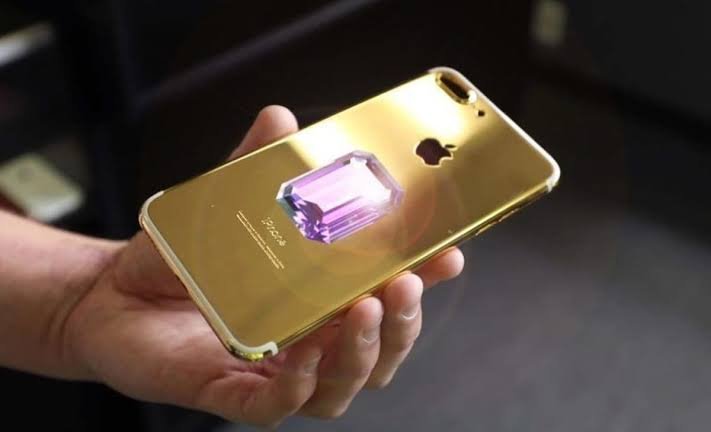
The Falcon Supernova iPhone 6 Pink Diamond is widely cited as the most expensive smartphone ever created, with a reported price of $48.5 million. Beneath the luxury treatment is Apple’s iPhone 6, but the exterior was offered in precious-metal finishes including 24-carat gold, rose gold and platinum.
Its defining feature is the large pink diamond set into the back of the phone. That gemstone, rather than the 2014-era electronics, is responsible for most of the extraordinary valuation. Falcon also promoted blue- and orange-diamond versions at lower but still enormous prices.
There is an important caveat: unlike a major auction record, the $48.5 million figure is a widely reported luxury price and independent documentation of a completed sale is limited. Even so, the Supernova remains the best-known symbol of extreme smartphone extravagance.
2. iPhone 5 Black Diamond – Stuart Hughes – About $15.3 Million
British luxury designer Stuart Hughes created the iPhone 5 Black Diamond for a Hong Kong businessman who already owned the rare stone used in the phone. The completed device was reported at about $15.3 million.
Hughes recreated the iPhone 5 chassis in solid gold and covered it with around 600 flawless white diamonds. The Apple logo on the rear contains another 53 diamonds. The centrepiece is the home button, replaced by a single 26-carat deep-cut black diamond that was reportedly valued at roughly $14.5 million on its own.
The handset took around nine weeks to make by hand. Its price is therefore less about the iPhone 5 itself and much more about one exceptionally rare gemstone combined with gold and extensive diamond setting.
3. iPhone 4S Elite Gold – Stuart Hughes – Around $9.4 Million
The iPhone 4S Elite Gold pushed Stuart Hughes’ diamond-phone creations even further. Reported at around $9.4 million, it was produced in an extremely small edition and decorated with more than 500 diamonds totalling over 100 carats.
The rear section and Apple logo use gold and diamonds, while an 8.6-carat diamond forms the home button. A second 7.4-carat diamond was reportedly supplied as an alternative. Even the presentation case was designed to be extravagant, incorporating platinum and rare decorative materials.
Technically it remains an iPhone 4S, but the jewellery surrounding the hardware makes the electronics almost incidental to the value.
4. iPhone 4 Diamond Rose Edition – Stuart Hughes – $8 Million
Before the Elite Gold appeared, the iPhone 4 Diamond Rose Edition was already redefining what an expensive smartphone could be. The device carried a reported price of $8 million and only two examples were produced.
Its rose-gold body is surrounded by roughly 500 diamonds, while the Apple logo on the rear is formed from dozens of additional stones. The home button is set with a rare 7.4-carat pink diamond, and the phone was supplied in a luxury granite presentation chest.
The enormous price comes from the concentration of high-quality diamonds, precious metal and extreme scarcity rather than from any change to the standard iPhone 4 technology.
5. Goldstriker iPhone 3GS Supreme – Stuart Hughes – $3.2 Million
The Goldstriker iPhone 3GS Supreme was one of the earliest smartphones to cross deeply into multimillion-dollar jewellery territory. Its reported price was $3.2 million.
The casing uses 271 grams of solid 22-carat gold. Diamonds surround the screen, the rear Apple logo is set with additional stones and a 7.1-carat diamond forms the home button. The device was also presented in a heavy chest carved from granite and finished with luxury leather and gold detailing.
Reports from the period said the design and manufacture took about ten months, showing how much of the value lay in hand craftsmanship rather than electronics.
6. iPhone 3G Kings Button – Peter Aloisson – About $2.5 Million
Austrian jeweller Peter Aloisson created the iPhone 3G Kings Button at a reported price of about $2.5 million. It arrived at a time when the iPhone itself was still a relatively new product, making the transformation especially striking.
The case combines 18-carat yellow, white and rose gold. Around its edge sit 138 brilliant-cut diamonds, but the feature that gives the phone its name is the home button: a large 6.6-carat diamond positioned at the centre of the device.
Like the Stuart Hughes models, the Kings Button did not become expensive because of better smartphone performance. It became expensive because Aloisson treated the iPhone as a platform for high jewellery.
7. Diamond Crypto Smartphone – JSC Ancort and Peter Aloisson – $1.3 Million
The Diamond Crypto Smartphone is unusual because luxury was not its only selling point. Developed by Russian firm JSC Ancort and decorated by jeweller Peter Aloisson, it was reported at approximately $1.3 million.
The Windows CE-based smartphone emphasised encrypted communication and data protection, an unusual feature for an ultra-luxury handset of its era. Its body was made with platinum and rose-gold details and decorated with 50 diamonds, including rare blue stones.
The combination of security technology, precious metal, scarce diamonds and bespoke design gave the Diamond Crypto a different identity from the many luxury phones that focused almost entirely on appearance.
8. iPhone 16 Pro Max ‘The Great, The Terrible, The Magnificent’ – Caviar – Up to $301,790
Unlike many phones near the top of this list, Caviar’s iPhone 16 Pro Max creation is based on relatively modern smartphone hardware. Introduced in 2024 as part of the Corona collection, the top configuration was reported at about $301,790.
Its dramatic rear design features a three-dimensional crown inspired by the regalia of Ivan the Terrible, Suleiman the Magnificent and Charlemagne. Caviar used 18-carat gold and decorated the piece with 402 gemstones, including diamonds, rubies and sapphires.
Only three examples were announced. The underlying iPhone 16 Pro Max still provides Apple’s contemporary smartphone technology, but nearly all of the huge premium comes from gold, gemstones, sculptural craftsmanship and rarity.
9. VIPN Black Diamond Smartphone – Jaren Goh – $300,000
The Black Diamond was a futuristic Windows Mobile smartphone designed by Jaren Goh and prepared for a tiny production run by Swiss company VIPN. Its announced price was $300,000, with only five units planned.
Instead of covering every surface with hundreds of gemstones, the Black Diamond used a glossy titanium and polycarbonate body with strategically placed diamonds. It ran Windows Mobile 5.0 and was described with Wi-Fi, a 400 MHz XScale processor, expandable memory and a 4-megapixel camera—serious specifications for its 2006 era.
Its rarity, unusual industrial design and jewellery treatment made it one of the most ambitious luxury smartphones of the pre-iPhone period.
10. iPhone Princess Plus – Peter Aloisson – $176,400
The iPhone Princess Plus was one of Peter Aloisson’s earliest high-jewellery transformations of Apple’s smartphone and carried a price of $176,400.
Its name comes from the princess-cut diamonds used around the body. The phone uses an 18-carat white-gold rim set with 138 princess-cut diamonds and 180 brilliant-cut diamonds, giving a total diamond weight of roughly 17.75 carats.
Aloisson’s creation appeared in 2008, when the original iPhone itself was still new. The Princess Plus helped establish a formula that later luxury designers would push much further: take a recognisable smartphone and turn its casing into a piece of fine jewellery.
What Makes the World’s Most Expensive Smartphones So Costly?
At the ordinary end of the market, smartphone prices are driven mainly by displays, processors, cameras, storage and software. At the extreme luxury end, those factors become secondary. The biggest price increases come from rare diamonds, gold, platinum and other materials that belong more naturally in fine jewellery.
Rarity matters just as much. A device made in an edition of two, three or five pieces has a completely different market from a mass-produced flagship. Bespoke commissions can push the value even higher because the buyer may supply a unique gemstone or request a completely individual design.
Hand craftsmanship is another major factor. Rebuilding a phone chassis in gold, setting hundreds of diamonds and creating a special presentation case can require weeks or months of specialist work. In many of these devices, the smartphone is simply the foundation for a much more valuable jewellery object.
Final Word
The world’s most expensive smartphones show just how far luxury customisation can move a familiar piece of technology away from its original purpose. The processor, camera and operating system may become outdated, but a rare diamond or handcrafted gold body can retain a completely different kind of value.
Apple iPhones dominate the list because their instantly recognisable design makes them ideal canvases for luxury jewellers such as Stuart Hughes, Peter Aloisson, Falcon and Caviar. Whether every headline valuation would survive a public auction is another question, but these devices remain remarkable examples of what happens when consumer technology meets high jewellery and extreme exclusivity.