India offers an extraordinary mix of Mughal forts, ancient temples, rock-cut caves, royal monuments and historic city landmarks. Every year, millions of travellers visit these places to experience architecture, history, religion and culture that span centuries.
There is no single official national database that measures footfall at every beach, pilgrimage centre, hill station and tourist attraction on exactly the same basis. To keep this ranking consistent and verifiable, the list uses the latest complete Ministry of Tourism data for centrally protected ticketed ASI monuments in 2024-25, ranked by domestic visitor numbers.
So, let’s check out the Top 10 Most Visited Tourist Places in India and see why these famous attractions continue to draw millions of visitors every year.
1. Taj Mahal, Agra, Uttar Pradesh – 62,64,225 Domestic Visitors
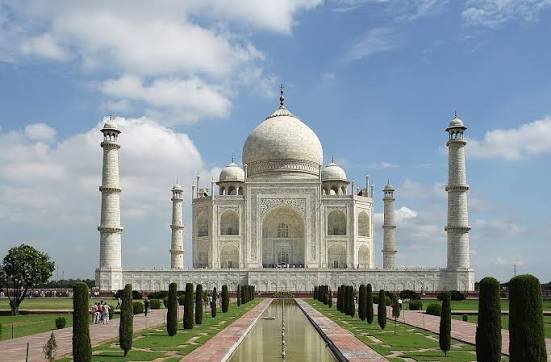
The Taj Mahal remains India’s most visited ticketed heritage attraction by a very large margin. According to Ministry of Tourism data, more than 62.64 lakh domestic visitors entered the monument during 2024-25. It also led the foreign-visitor ranking with more than 6.45 lakh international visitors.
Commissioned by Mughal emperor Shah Jahan in memory of Mumtaz Mahal, the white-marble mausoleum has become one of the most recognisable buildings in the world. Its symmetry, marble inlay work, gardens and changing appearance under different light make it as much an architectural experience as a historical one.
Agra’s location on the popular Delhi-Agra-Jaipur Golden Triangle also adds to the huge footfall. Many travellers combine the Taj Mahal with Agra Fort, Mehtab Bagh and Fatehpur Sikri, making the city one of India’s most important tourism centres.
2. Sun Temple, Konark, Odisha – 35,71,289 Domestic Visitors
The Sun Temple at Konark attracted more than 35.71 lakh domestic visitors in 2024-25, making it the second most visited centrally protected ticketed monument in India.
Built in the 13th century and dedicated to Surya, the Sun God, the UNESCO World Heritage Site was conceived as a gigantic stone chariot. Its monumental wheels, sculpted horses and richly carved walls are among the finest surviving achievements of medieval Indian architecture.
Konark also benefits from its location on Odisha’s popular Bhubaneswar-Puri-Konark tourism circuit. Visitors travelling to the Jagannath Temple and beaches of Puri often add Konark to the same journey. The annual Konark Dance Festival and the site’s coastal setting further strengthen its appeal to cultural and leisure travellers.
3. Qutub Minar, Delhi – 32,04,760 Domestic Visitors
Delhi’s Qutub Minar welcomed more than 32.04 lakh domestic visitors during 2024-25, placing it third in the national ranking. It was also one of India’s most popular monuments among foreign tourists, receiving more than 2.20 lakh international visitors.
Standing 72.5 metres high, the red-and-buff sandstone tower dominates the historic Qutub complex in Mehrauli. Construction began under Qutb-ud-din Aibak and continued under later rulers, creating a monument that records several phases of early Delhi Sultanate architecture.
The wider complex adds significantly to the experience. Visitors can see the Quwwat-ul-Islam Mosque, Alai Darwaza, the Iron Pillar, tombs and the unfinished Alai Minar. Easy access from central Delhi and the monument’s UNESCO World Heritage status help keep visitor numbers consistently high.
4. Red Fort, Delhi – 28,84,399 Domestic Visitors
The Red Fort recorded more than 28.84 lakh domestic visitors in 2024-25, making it the fourth most visited ticketed ASI monument in India.
Emperor Shah Jahan began building the fort in 1639 after shifting the Mughal capital from Agra to Delhi. Its enormous red sandstone walls enclosed palaces, audience halls, gardens and residential spaces that formed the political heart of Shahjahanabad for generations.
The fort has significance far beyond Mughal history. Every Independence Day, the Prime Minister hoists the national flag from its ramparts and addresses the country, giving the monument a powerful place in modern Indian identity. Its Old Delhi location near Jama Masjid, Chandni Chowk and other major attractions makes it an essential stop for millions of tourists.
5. Bibi Ka Maqbara, Chhatrapati Sambhaji Nagar, Maharashtra – 20,04,535 Domestic Visitors
Bibi Ka Maqbara recorded just over 20.04 lakh domestic visitors in 2024-25, a major increase that placed it fifth in the national ranking.
The 17th-century mausoleum is popularly called the ‘Taj of the Deccan’ because of its visual resemblance to the Taj Mahal. It was built in memory of Dilras Banu Begum, the wife of Mughal emperor Aurangzeb and mother of Prince Azam Shah. Its central dome, four minarets, formal gardens and white surfaces create one of Maharashtra’s most recognisable Mughal-era landmarks.
Chhatrapati Sambhaji Nagar is also a gateway to the UNESCO-listed Ajanta and Ellora cave complexes. Travellers frequently combine Bibi Ka Maqbara with Ellora, Daulatabad Fort, Grishneshwar Temple and Panchakki, helping the monument benefit from a strong regional heritage circuit.
6. Ellora Caves, Maharashtra – 17,39,873 Domestic Visitors
The Ellora Caves received nearly 17.40 lakh domestic visitors during 2024-25. Although slightly below the previous year’s total, the site remained firmly among India’s most visited heritage attractions.
Ellora is extraordinary because its 34 major rock-cut caves represent Buddhist, Hindu and Jain traditions within one vast archaeological landscape. The monuments were created over several centuries, roughly between the 6th and 10th centuries, and collectively form a UNESCO World Heritage Site.
The highlight is the Kailasa Temple, a monumental structure carved downward from a single mass of rock. Its scale, sculptures and engineering continue to astonish visitors. Ellora’s proximity to Grishneshwar Jyotirlinga, Daulatabad Fort and Chhatrapati Sambhaji Nagar makes it attractive to both pilgrims and heritage travellers.
7. Golconda Fort, Hyderabad, Telangana – 15,63,524 Domestic Visitors
Golconda Fort attracted more than 15.63 lakh domestic visitors in 2024-25, placing it seventh among India’s most visited ticketed ASI monuments.
The fortress developed over several centuries and became the principal stronghold of the Qutb Shahi rulers before Hyderabad emerged as their capital. Massive gateways, ruined palaces, defensive walls, water systems and hilltop structures reveal the scale of the former fortified city.
One of Golconda’s best-known features is its unusual acoustic design: a clap near the entrance can be heard at a distant pavilion higher inside the fort. Visitors also climb toward the upper sections for panoramic views across Hyderabad. Its history, dramatic ruins and evening sound-and-light attractions make it one of the city’s most popular sightseeing stops.
8. Agra Fort, Agra, Uttar Pradesh – 15,45,550 Domestic Visitors
Agra Fort recorded more than 15.45 lakh domestic visitors during 2024-25. It also ranked second among centrally protected monuments for foreign visitors, with more than 2.24 lakh international tourists.
The vast red sandstone fortress was transformed into a major Mughal imperial complex under Emperor Akbar and later embellished by Jahangir and Shah Jahan. Within its walls are palaces, courtyards, audience halls, mosques and marble pavilions that reflect changing Mughal architectural tastes.
Its biggest tourism advantage is location. Agra Fort lies only a few kilometres from the Taj Mahal, so many visitors see both monuments on the same day. The fort also offers distant views toward the Taj, connecting two of India’s greatest Mughal landmarks in a single historical experience.
9. Upper Fort Aguada, Goa – 13,58,790 Domestic Visitors
Upper Fort Aguada in Goa drew more than 13.58 lakh domestic visitors in 2024-25, placing it ninth in the Ministry of Tourism’s national ranking.
The Portuguese built Fort Aguada in the early 17th century to defend the mouth of the Mandovi River and protect shipping routes. Its strategic hilltop position overlooks the Arabian Sea, while the surviving lighthouse, walls and defensive structures preserve an important part of Goa’s colonial history.
Unlike many inland monuments on this list, Aguada also benefits from Goa’s huge leisure-tourism market. Candolim and Sinquerim beaches are nearby, allowing travellers to combine history with coastal sightseeing. The renovated former Aguada jail complex and its freedom-struggle museum have added another cultural attraction to the area.
10. Charminar, Hyderabad, Telangana – 13,43,503 Domestic Visitors
Charminar completes the Top 10 after receiving more than 13.43 lakh domestic visitors in 2024-25. Together with Golconda Fort, it gives Hyderabad two places in the national ranking.
Built in 1591 under Muhammad Quli Qutb Shah, Charminar stands at the heart of Hyderabad’s old city. Its four minarets, arches and upper galleries have become the city’s most recognisable architectural symbol.
The experience extends well beyond the monument itself. Laad Bazaar, Mecca Masjid, traditional food streets, jewellery shops and busy old-city lanes surround Charminar, creating an atmosphere very different from an isolated archaeological site. Visitors come for the architecture but often stay to explore Hyderabad’s cuisine, shopping and living heritage.
Why Do These Tourist Places Receive So Many Visitors?
Most of the places in this ranking combine several advantages at once: strong historical importance, recognisable architecture, easy transport connections and inclusion in popular tourism circuits. The Taj Mahal benefits from the Golden Triangle, Konark from the Puri-Konark-Bhubaneswar circuit, and Agra Fort from being located beside India’s most famous monument.
UNESCO World Heritage status also matters. The Taj Mahal, Konark Sun Temple, Qutub Minar complex, Red Fort, Ellora Caves and Agra Fort all carry global heritage recognition, increasing their appeal to both domestic and international travellers.
The figures should not be interpreted as a ranking of every attraction in India. Major pilgrimage centres, beaches, hill stations and entire cities may receive much larger total visitor numbers, but they do not all use a comparable ticketed-entry counting system. The ASI data provides one of the most consistent official ways to compare individual heritage attractions.
Final Word
The latest official data confirms the extraordinary pull of India’s historic monuments. The Taj Mahal remains in a league of its own with more than 62 lakh domestic visitors in a year, while Konark, Qutub Minar and the Red Fort each attract crowds measured in the millions.
The Top 10 also shows the geographic range of Indian tourism. Uttar Pradesh, Delhi, Odisha, Maharashtra, Telangana and Goa all appear in the ranking, covering Mughal mausoleums, ancient temples, rock-cut caves, forts and urban landmarks. Together, they demonstrate why heritage continues to be one of the strongest foundations of tourism in India.