India operates one of the largest railway networks in the world, carrying millions of passengers every day across thousands of stations. At the heart of this enormous system are a handful of giant railway terminals and junctions where dozens—or even hundreds—of trains arrive, depart and pass through every day.
But what exactly makes a railway station “big”? Passenger footfall, station area, number of tracks and daily train movements can all be used. For a clear comparison, this ranking uses the number of passenger platforms as the primary measure, with the number of tracks and overall operational scale used to separate stations that have the same platform count. Several Indian stations are tied at 10 platforms, so their exact positions can vary depending on the measurement used.
One particularly important change came in July 2026, when Howrah Junction commissioned Platform 24, increasing its total from 23 to 24 and strengthening its position as India’s largest railway station by platform count.
From the enormous terminals of Kolkata and Mumbai to major junctions in Delhi, Chennai and southern India, these stations are critical to keeping the country moving. Let’s check out the top 10 list of the biggest railway stations in India.
1. Howrah Junction, West Bengal – 24 Platforms
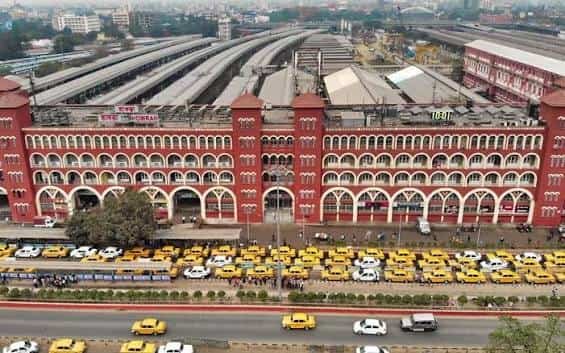
Howrah Junction is the biggest railway station in India by number of platforms, with 24 passenger platforms following the commissioning of its newest platform in July 2026.
Located on the western bank of the Hooghly River opposite Kolkata, Howrah is one of India’s oldest and most important railway terminals. It serves both Eastern Railway and South Eastern Railway routes and connects Kolkata with virtually every major region of the country.
The station was already operating with 23 platforms when the new 635-metre-long Platform 24 was developed. The new platform is capable of handling long-distance trains with up to 24 coaches and was introduced to improve train handling and reduce congestion.
Howrah handles an extraordinary mixture of suburban EMU services and long-distance Mail and Express trains. Its enormous passenger volume, large platform complex and strategic role in eastern India make it much more than simply a railway station—it functions as one of the principal gateways to Kolkata.
2. Sealdah Railway Station, West Bengal – 21 Platforms
Sealdah Railway Station in Kolkata ranks second with 21 active platforms.
Unlike Howrah, which handles a large mix of long-distance and suburban trains, Sealdah is particularly important to Kolkata’s enormous suburban railway network. Its platforms are divided between the North, Main and South sections.
Platforms 1 to 5 primarily support northern suburban services, while the central section handles suburban as well as long-distance trains. The southern platforms serve routes towards areas including Sonarpur, Canning, Diamond Harbour and the southern suburbs.
The scale of Sealdah’s commuter operation makes it one of India’s most intensely used railway terminals. In 2024, Eastern Railway also extended Platforms 1 to 5 so that they could accommodate 12-coach EMU trains.
With 21 platforms serving one of the world’s largest urban rail markets, Sealdah comfortably takes second position.
3. Chhatrapati Shivaji Maharaj Terminus, Maharashtra – 18 Platforms
Mumbai’s historic Chhatrapati Shivaji Maharaj Terminus, popularly known as CSMT, has 18 platforms.
Of these, seven serve Mumbai suburban trains and eleven serve long-distance services. This allows CSMT to function simultaneously as a massive commuter terminal and one of Mumbai’s principal gateways for intercity rail travel.
The station also has exceptional historical significance. Originally known as Victoria Terminus, its famous Victorian Gothic Revival building was completed in the late nineteenth century and is recognised as a UNESCO World Heritage Site.
CSMT has expanded repeatedly over its history. It originally had six platforms, later grew to 13, then 15 and eventually reached the present 18-platform configuration.
The combination of suburban traffic, long-distance trains, architectural importance and its central location makes CSMT one of India’s most remarkable railway stations.
4. Chennai Central Railway Station, Tamil Nadu – 17 Platforms
MGR Chennai Central Railway Station has 17 platforms when its suburban terminal is included, placing it fourth on the list.
It is the principal long-distance railway gateway to Chennai and one of the most important stations in southern India. Southern Railway records distinguish the main terminal from the adjoining suburban section, but together the complex has 17 platforms.
Long-distance trains from Chennai Central connect Tamil Nadu with cities such as Delhi, Kolkata, Mumbai, Bengaluru, Hyderabad and destinations across eastern and northern India.
Its famous red-and-white station building is also one of Chennai’s most recognisable landmarks.
The combination of mainline trains and suburban operations creates a huge passenger flow throughout the day, making Chennai Central both one of India’s largest and one of its most important railway terminals.
5. New Delhi Railway Station, Delhi – 16 Platforms
New Delhi Railway Station, or NDLS, ranks fifth with 16 platforms.
The platforms extend between two major entrances: Paharganj on one side and Ajmeri Gate on the other. The station sits close to central Delhi and provides convenient connections with the Delhi Metro and Airport Express.
Northern Railway records show that the station handles more than 250 trains, while daily passenger footfall can reach around half a million and rise further during major festival periods.
New Delhi is particularly important because trains originating here connect the national capital with almost every major region of India. Rajdhani, Vande Bharat, Shatabdi and numerous other long-distance services use the terminal.
The station is also undergoing major redevelopment plans intended to create a larger, modern integrated transportation hub.
6. Kharagpur Junction, West Bengal – 12 Platforms
Kharagpur Junction has 12 passenger platforms and approximately 24 tracks, giving it one of the largest station layouts in eastern India.
Kharagpur occupies an extremely strategic position on the Indian Railways network. Major routes from Howrah divide here towards Mumbai, Chennai and other parts of eastern and southern India.
Its 12-platform layout includes platforms designated 1, 1A, 2, 2A, 3, 3A, 4, 4A, 5, 6, 7 and 8.
Kharagpur was also famous for many years for having one of the longest railway platforms in the world, although longer platforms have subsequently been constructed elsewhere in India.
The enormous track network surrounding the station reflects Kharagpur’s importance not only for passenger trains but also for freight movement across the eastern railway corridor.
7. Ahmedabad Junction, Gujarat – 12 Platforms
Ahmedabad Junction, commonly called Kalupur Railway Station, also has 12 platforms and around 16 tracks.
It is the largest and most important railway station in Ahmedabad and one of Western Railway’s major hubs. Trains from the station connect Gujarat with Delhi, Mumbai, Rajasthan, Madhya Pradesh and numerous cities across India.
Ahmedabad is currently undergoing one of the most ambitious station transformations in the country. The redevelopment is being integrated with the Mumbai–Ahmedabad High-Speed Rail corridor, Ahmedabad Metro and other urban transport systems.
The high-speed railway project has required restructuring around platforms 10, 11 and 12, meaning the conventional station layout is undergoing substantial changes. The wider station complex nevertheless remains based around its 12-platform arrangement.
Once redevelopment is completed, Ahmedabad is expected to become one of India’s most advanced multimodal railway hubs.
8. Gorakhpur Junction, Uttar Pradesh – 10 Platforms
Gorakhpur Junction has 10 passenger platforms and an extensive rail yard with around 28 tracks.
It serves as the headquarters of the North Eastern Railway and is one of the most important railway stations for eastern Uttar Pradesh.
Gorakhpur connects major routes towards Lucknow, Delhi, Bihar, Assam and other parts of northeastern India. Its location also makes it important for passengers travelling towards the India-Nepal border region.
The station became internationally famous for its extraordinarily long platform. For several years, Gorakhpur held the record for the world’s longest railway platform before being surpassed by Hubballi Junction in Karnataka.
Its 10 platforms combined with a particularly large track network give Gorakhpur the highest position among the group of major Indian stations tied at 10 platforms.
9. Vijayawada Junction, Andhra Pradesh – 10 Platforms
Vijayawada Junction has 10 platforms and approximately 24 tracks, making it one of the largest and busiest railway junctions in southern India.
Its importance comes largely from geography. Vijayawada sits at the meeting point of major railway corridors connecting Chennai, Delhi, Kolkata, Hyderabad and other important cities.
The station handles passenger as well as substantial freight traffic, with large numbers of trains moving through the junction throughout the day.
Vijayawada is classified as a major Non-Suburban Grade-1 station and serves as one of Andhra Pradesh’s most important transport gateways.
Its numerous tracks, extensive yard and high train frequency make the station considerably larger operationally than its platform number alone might suggest.
10. Prayagraj Junction, Uttar Pradesh – 10 Platforms
Prayagraj Junction completes the top ten with 10 platforms.
The station sits on some of India’s most important east-west and north-south railway corridors and serves as a major interchange for trains travelling between Delhi, Kolkata, Mumbai, Varanasi and other destinations.
Recent planning documents note that Prayagraj Junction handles around 190 trains per day, with six of its platforms capable of accommodating trains with 24 or more coaches.
Its importance becomes especially visible during the Kumbh Mela and Maha Kumbh, when Prayagraj receives enormous temporary increases in passenger traffic and Indian Railways operates special trains and crowd-management arrangements.
Several other Indian stations, including Kanpur Central and Mathura Junction, also have 10 platforms. Because of this tie, the final positions can change depending on whether platforms, tracks, train movements or passenger footfall are given greater weight.
What Makes India’s Biggest Railway Stations So Important?
India’s largest railway stations perform several functions that smaller stations cannot handle on the same scale.
Large numbers of platforms: More platforms allow several trains to arrive, depart or wait simultaneously.
Extensive track networks: Large junctions need additional tracks for through trains, shunting, maintenance and freight movement.
Heavy passenger traffic: Stations such as Howrah, Sealdah and New Delhi serve hundreds of thousands of passengers on busy days.
Suburban connectivity: Howrah, Sealdah, CSMT and Chennai Central play major roles in their cities’ commuter networks.
National connections: Major terminals provide direct trains to numerous states and distant metropolitan cities.
Strategic junction locations: Kharagpur, Vijayawada and Prayagraj sit at points where important national railway corridors meet or divide.
Modern redevelopment: New Delhi, Ahmedabad, CSMT and several other stations are undergoing major upgrades aimed at improving capacity, passenger movement and integration with metros, buses and other transport.
Final Word
India’s biggest railway stations demonstrate the extraordinary scale of the country’s rail network. Following the opening of its new platform in July 2026, Howrah Junction now leads with 24 platforms, followed by Sealdah with 21 and Mumbai CSMT with 18.
Chennai Central, New Delhi and the huge junctions at Kharagpur, Ahmedabad, Gorakhpur, Vijayawada and Prayagraj show how Indian Railways combines enormous passenger volumes with an increasingly complex national transport network.