Two finishes dominate the conversation when Indian homeowners choose flooring: marble and wood. Marble feels classic and formal. Wood feels warm and inviting. But choosing between them is rarely straightforward, because both come with trade-offs that only become apparent after installation. Amit, an IT manager in Hyderabad building a new 4BHK villa, wanted marble in the living room and wood in the bedrooms. Six months into living with both, he has opinions on what worked and what he would change.
What Marble Brings To A Home
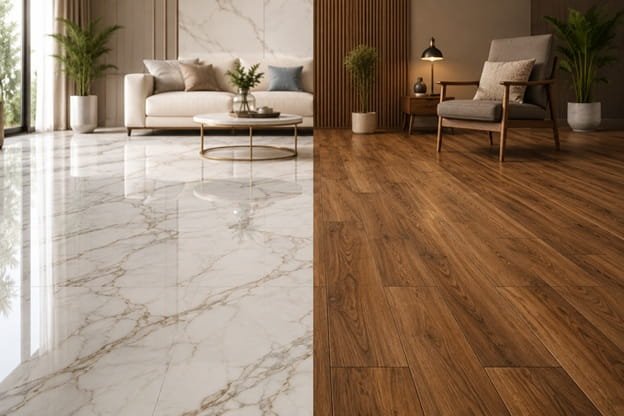
Marble tile design has been a staple of Indian interiors for generations. The material carries a visual weight that few alternatives match. Natural veining, a polished, luminous surface, and a cool underfoot feel make marble a strong choice for formal living rooms, foyers, and puja rooms.
Modern marble tiles design have made the aesthetic more accessible. Digital printing replicates veining patterns so accurately that most visitors cannot tell the difference once tiles are laid. The practical benefits over natural marble are significant: no sealing, no periodic polishing, and no staining from turmeric or lemon.
Where Marble Works Best
- Living rooms and drawing rooms are where a formal tone suits the space.
- Foyers and entryways that benefit from a bright, reflective surface.
- Puja rooms, where the cultural association with marble adds meaning.
- Bathrooms with good lighting, paired with a matt or anti-skid floor finish.
What Do Wood Tiles Bring To a Home
For warmth, use wood tile that stone and marble cannot replicate. The grain patterns, colour variations and linear layout create a relaxed, comfortable atmosphere. Wood-look vitrified tiles deliver this warmth without the maintenance headaches of real hardwood.
Real wood warps in humidity, scratches easily and needs refinishing every few years. In Indian climates with monsoon moisture and high heat, solid hardwood flooring has a limited lifespan. Wood-look tiles solve all of this. They handle moisture, resist scratches and need nothing more than regular mopping.
Where Wood Tiles Work Best
- Bedrooms where warmth and softness in the visual tone help the room feel restful.
- Living rooms in apartments that want a contemporary, Scandinavian-influenced look.
- Study rooms and home offices are where a quieter visual palette suits focused work.
- Corridors and passages where the linear plank layout elongates the space.
Comparing The Two Side By Side
Understanding the key differences between marble and wood flooring helps you choose the option that best suits your home’s design, maintenance needs, and everyday lifestyle.
| Factor | Marble tiles | Wood tiles |
| Visual tone | Formal, bright, luxurious | Warm, relaxed, contemporary |
| Maintenance | Natural marble needs sealing; vitrified marble is low maintenance | Wood-look tiles are low maintenance; real wood needs refinishing |
| Durability | High for vitrified; moderate for natural marble | High for wood-look tiles; low for real wood in humid climates |
| Cost | Varies widely; vitrified marble is more affordable | Wood-look vitrified is mid-range; real hardwood is expensive |
| Climate suitability | Excellent for hot climates; marble stays cool | Wood-look tiles handle all climates; real wood struggles with humidity |
| Best rooms | Living rooms, foyers, puja rooms | Bedrooms, studies, corridors |
Both options offer distinct advantages, so the right choice depends on your aesthetic preferences, budget, and the space’s requirements. For instance, premium brands like Simpolo Tiles & Bathware offer a wide range of marble-look and wood-look tile collections in different sizes, finishes, and designs, making it easier to find an option that complements your home’s interior style.
Can You Mix Both In One Home
Using marble tile design in public areas and wood tiles in private rooms creates a natural shift in mood as you move through the home. The living room feels bright and expansive. The bedroom feels cocooned and warm.
Amit did exactly this. His villa has marble-look vitrified in the living and dining areas, and wood-look planks in all three bedrooms. The contrast works because the two finishes serve different emotional purposes.
The transition between materials matters. Use a slim metal strip or a stone threshold at doorways to create a clean break. Avoid butting two different tiles directly against each other without a divider.
What He Would Do Differently
Amit is happy with his material choices but wishes he had tested samples in each room before committing. The marble-look tile he picked for the living room reads slightly cooler under LED downlights than it did in the showroom. In the bedrooms, the wood-look planks are exactly right.
His advice: bring samples home. Live with them for a day or two in the actual room with your actual lighting. The right floor finish is the one that looks good where it will be installed, not in the store.